Commission agreement template: 13 clauses every sales commission agreement needs
A free, section-by-section commission agreement template: qualifying sales, rates, tiers, splits, draws, clawbacks, statements, separation and disputes, with notes on getting each right.
This template is a starting point, not legal advice. Commission agreements are governed by state law, and some states have specific requirements, so have an employment attorney review your final version.
Quick Answer
A commission agreement is a written contract that sets out exactly how a salesperson earns and is paid commission: who it covers, what sales qualify, the rates, when commission is earned and paid, draws, clawbacks, what happens when the person leaves, and how disputes are resolved. Some states require one. California, for example, requires commission arrangements to be in a signed written contract that states how commissions are computed and paid (Labor Code §2751). Below is a section-by-section template you can adapt.
Commission Agreement Template
Replace everything in [brackets]. Each numbered section is a clause most agreements need.
Company: ____________________ Date: ________
Rep: ____________________ Date: ________
What to Get Right in Each Section
- Qualifying sales and timing cause more disputes than rates. Define the exact event that earns commission.
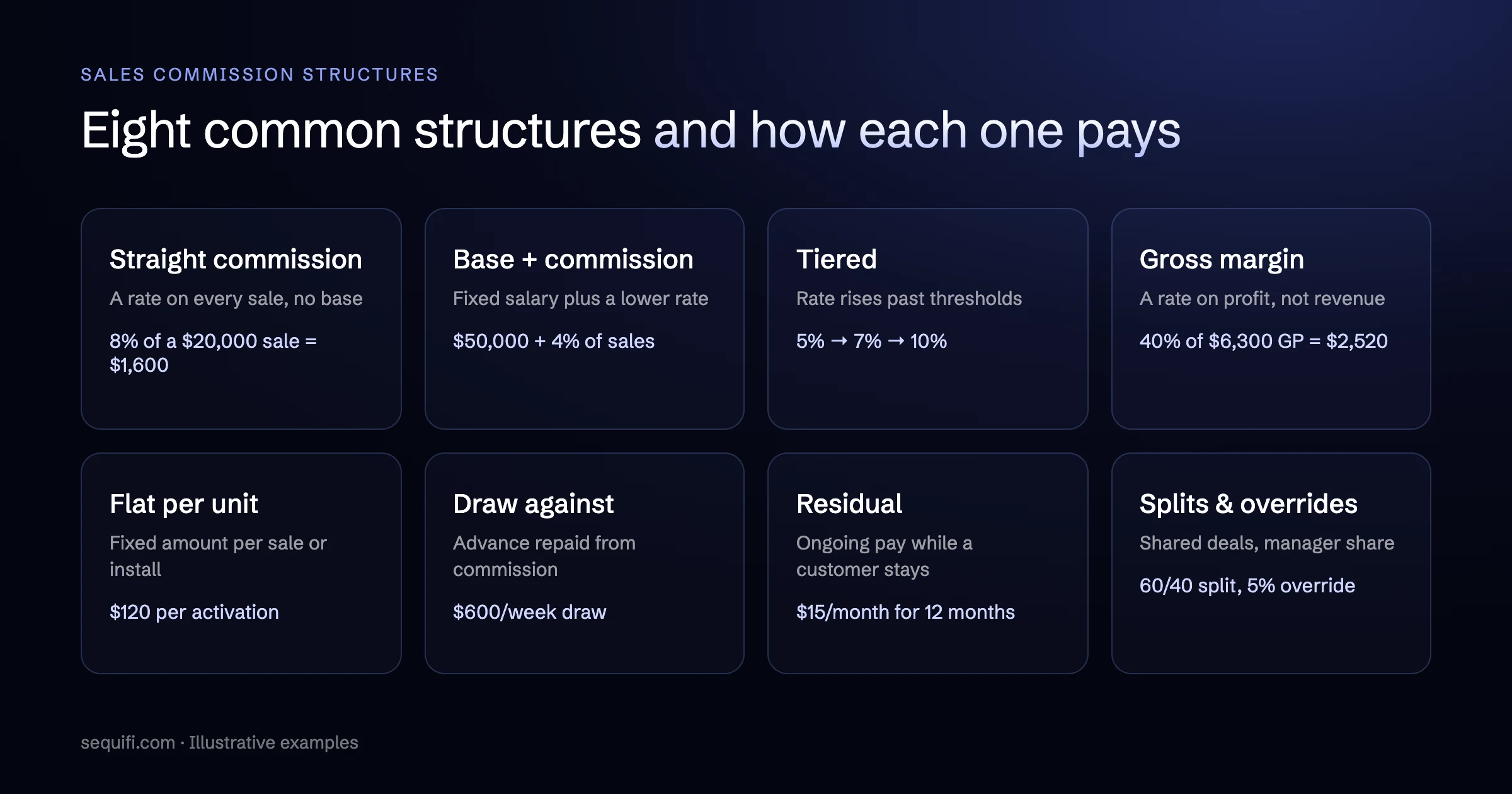
- Tiers: always say marginal or retroactive. On the same sales they can pay very differently; try it in the commission calculator.
- Draws: say whether the draw is recoverable and what happens to a balance at separation. See draw against commission.
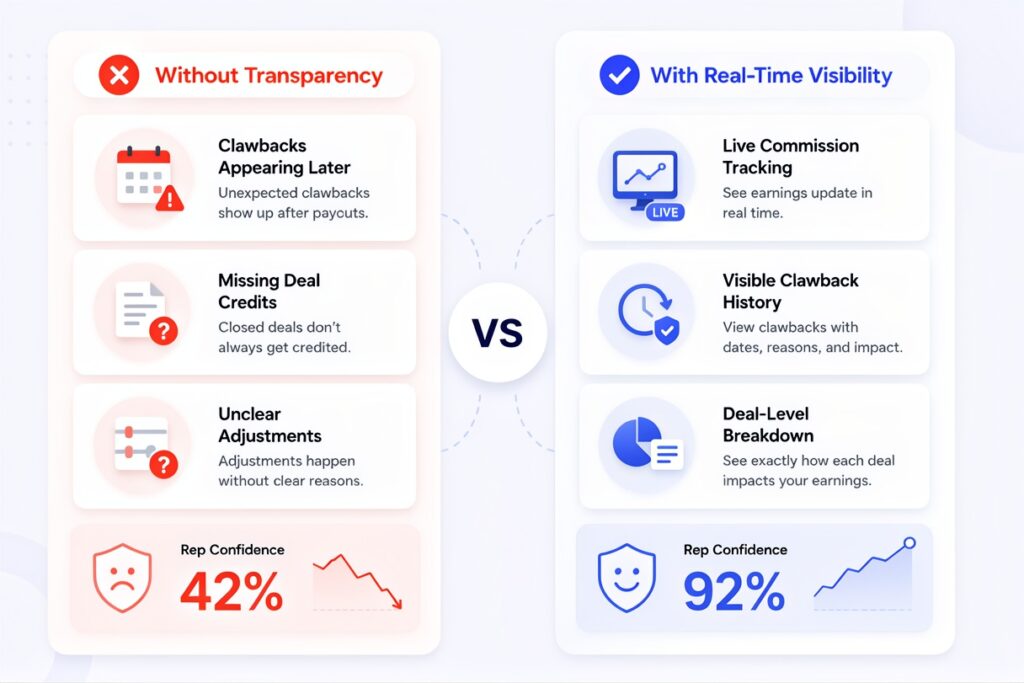
- Clawbacks: state the window, the formula and the notice the rep will receive. See how clawbacks work.
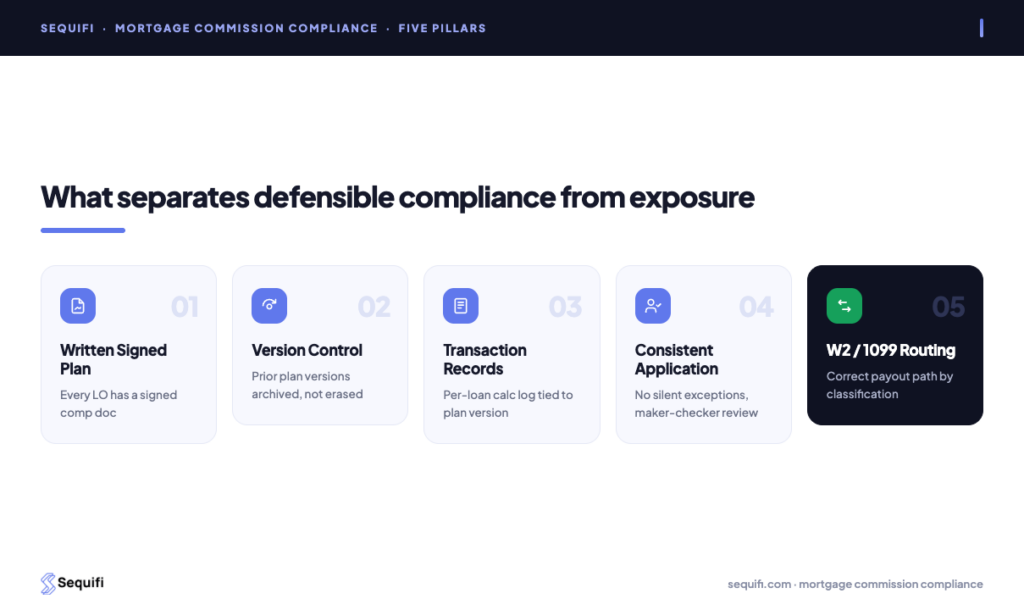
- Classification: W-2 and 1099 reps have different legal protections. Review classification before using one template for both.
Commission Agreement vs. Commission Plan
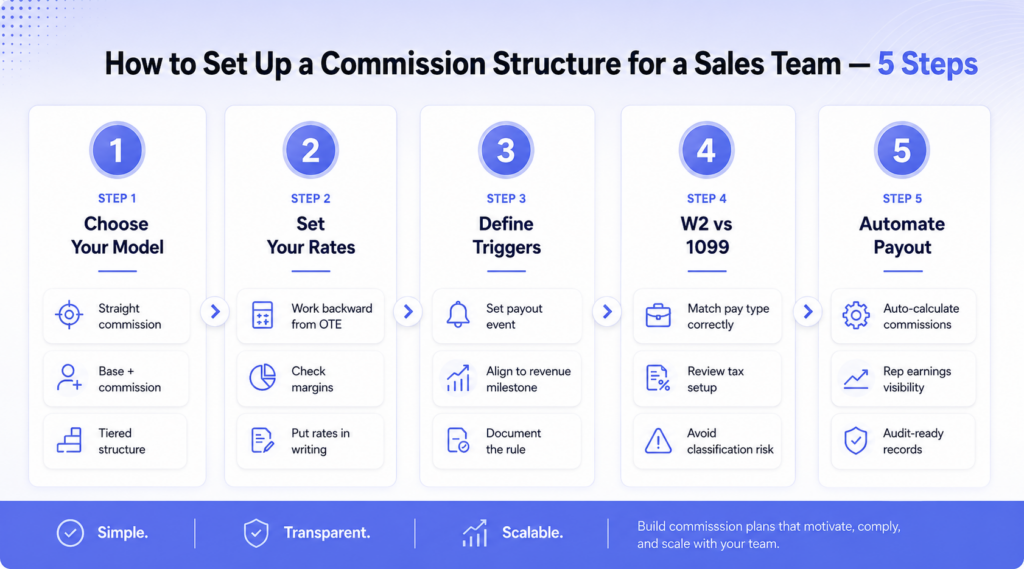
The agreement is the signed contract with an individual. The plan is the set of rates and rules, which may apply to a whole team and change each year. Many companies keep the rules in a plan document and have each rep sign an agreement that incorporates the current plan. For the plan itself, see commission structures.
Sequifi lets you build agreements and send them for e-signature, then pays commission from the same rules, so what reps signed and what they are paid always match. See documents and e-signing and commission software.
Frequently Asked Questions
What should a commission agreement include?
The parties and classification, qualifying sales, rates and how commission is calculated, splits and overrides, when commission is earned and paid, draws, clawbacks, statements, how the plan can change, what happens at separation, and how disputes are handled.
Is a commission agreement required by law?
In some states, yes. California, for example, requires a signed written contract for commission pay that explains how commissions are computed and paid. Even where it is not required, a written agreement prevents most disputes.
Can an employer change a commission agreement?
Usually, with notice, for future sales, but the rules depend on the agreement and state law. Good practice is written notice in advance and changes that apply only to sales after the effective date.
Do I get commission after I quit?
It depends on the agreement and state law. Many agreements pay commission on sales that qualified before the separation date; some extend to sales that close within a set period afterward.
Is this template legal advice?
No. It is a starting point. Have an employment attorney review your final agreement for your state and workforce.
Sources
See Sequifi run your kind of pay.
Commissions, payroll and HR in one platform, built for teams where every paycheck is different.
Book a demo