Commission structures: 8 types of sales commission, with examples
The eight most common sales commission structures, each with a worked example, plus revenue vs gross profit, how to choose a structure, and the mistakes that cause disputes.
Quick Answer
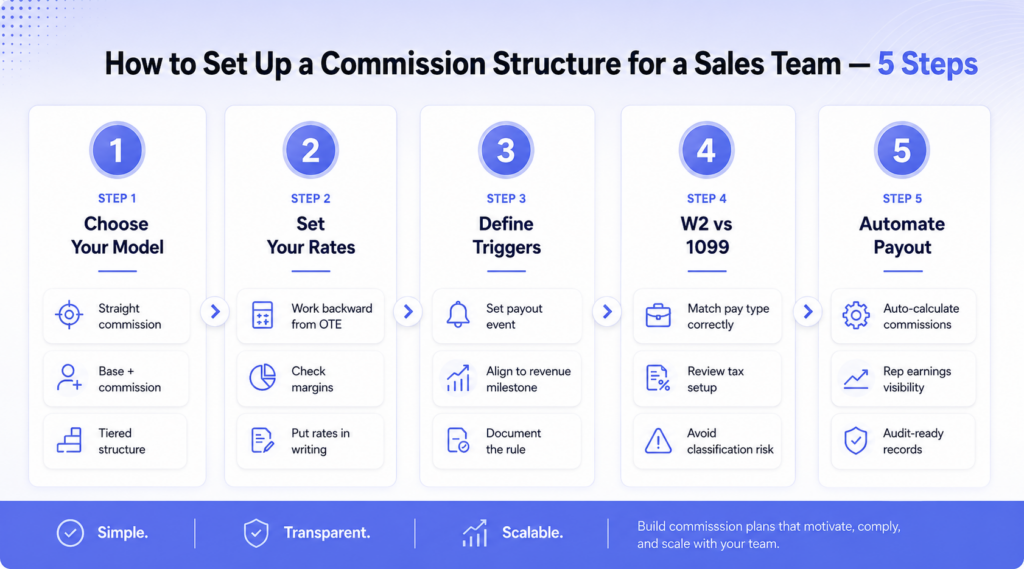
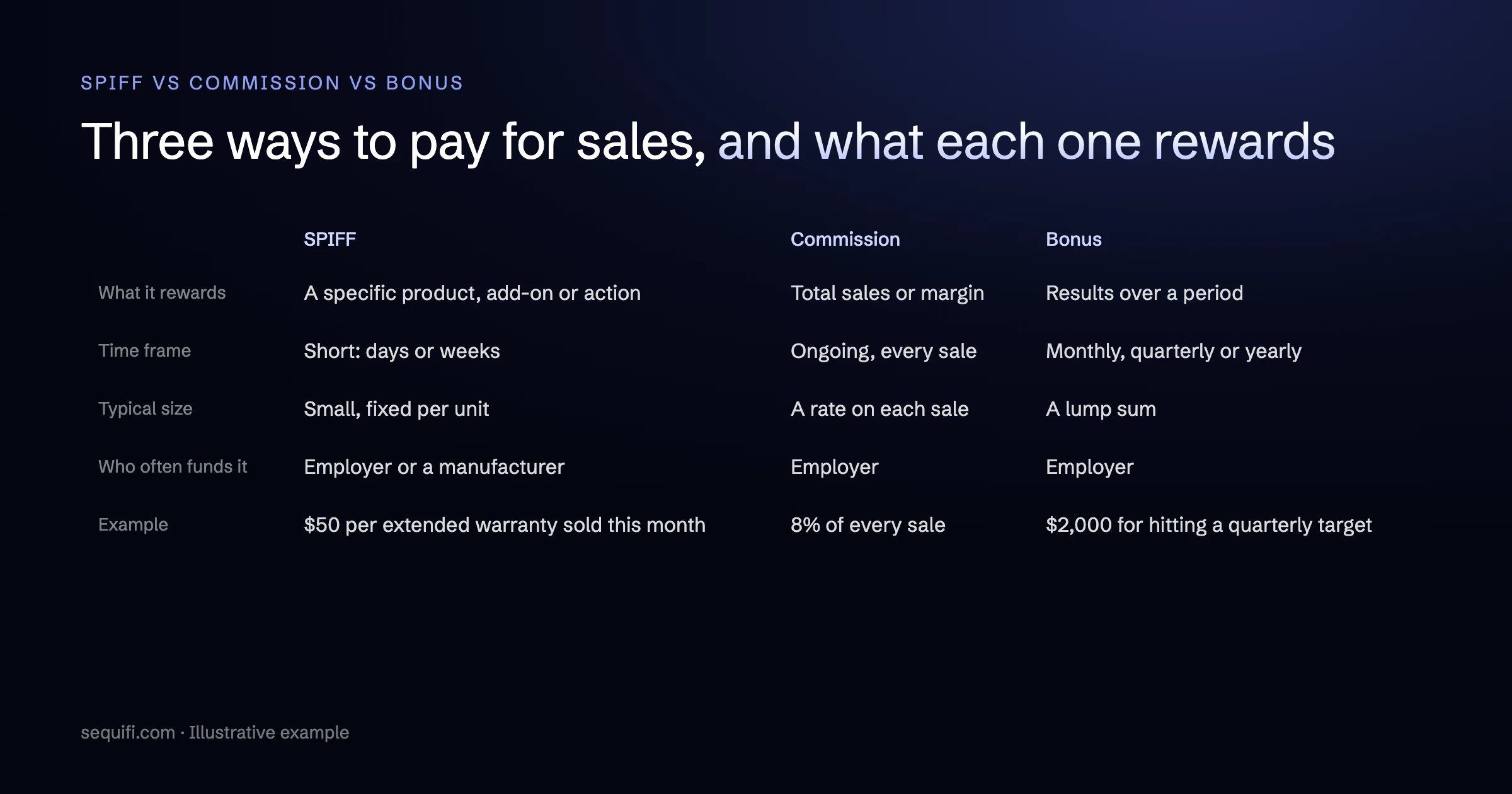
A commission structure is the set of rules that turns sales into pay: what the rep is paid on (revenue, gross profit, or units), at what rate, when it is earned, and how it changes with volume. The most common structures are straight commission, base salary plus commission, tiered commission, gross margin commission, flat commission per unit, draw against commission, residual commission, and splits and overrides. Most real plans combine two or three of them.
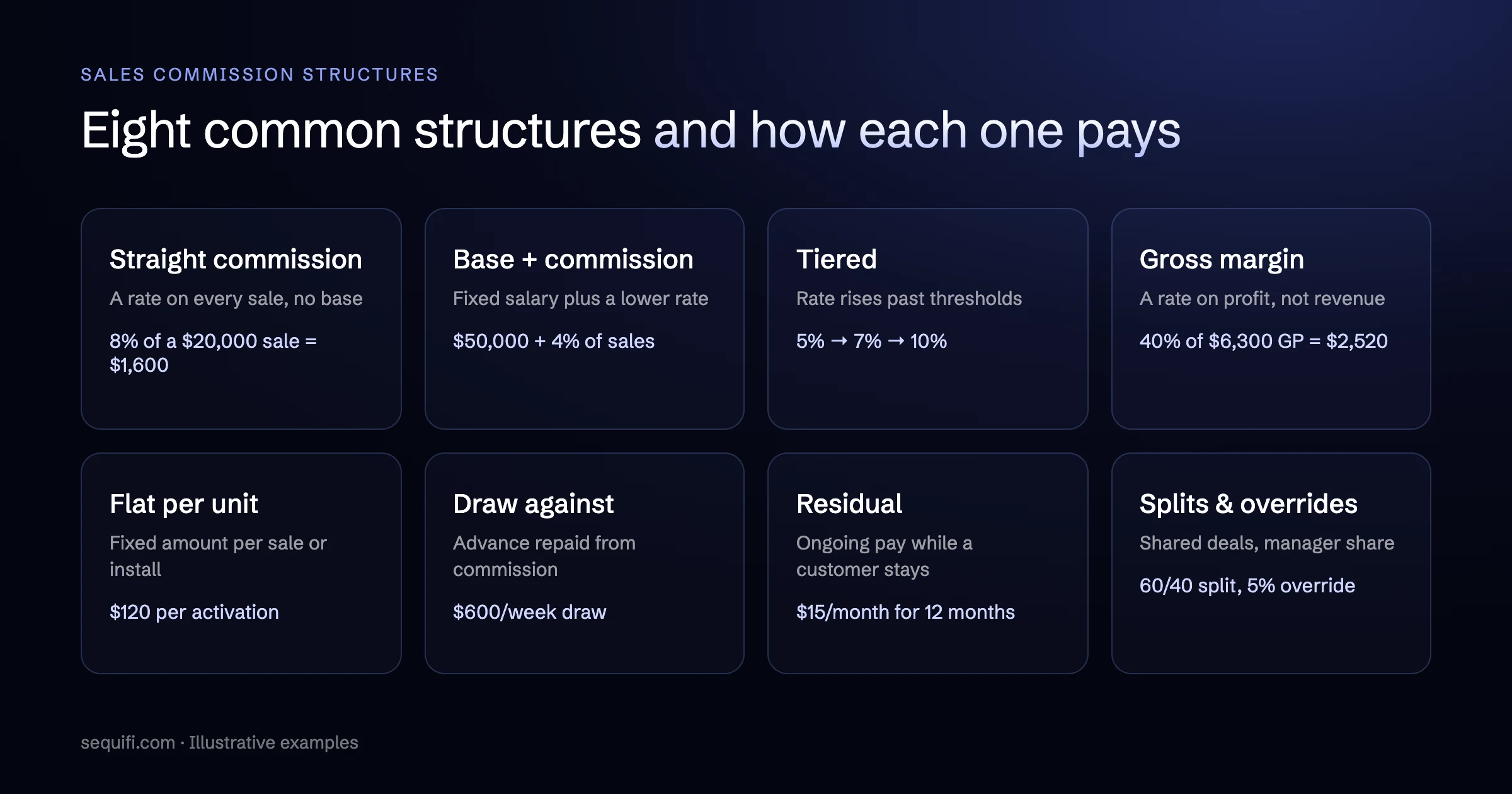
The 8 Most Common Commission Structures
1. Straight commission
The rep earns a percentage of every sale and has no base salary. Pay rises and falls entirely with results.
Example: 8% of a $20,000 sale pays $1,600.
Best for: experienced reps in high-volume roles, including many door-to-door teams.
2. Base salary plus commission
A fixed salary plus a lower commission rate. The base gives stability; the commission keeps the incentive.
Example: $50,000 base plus 4% of sales.
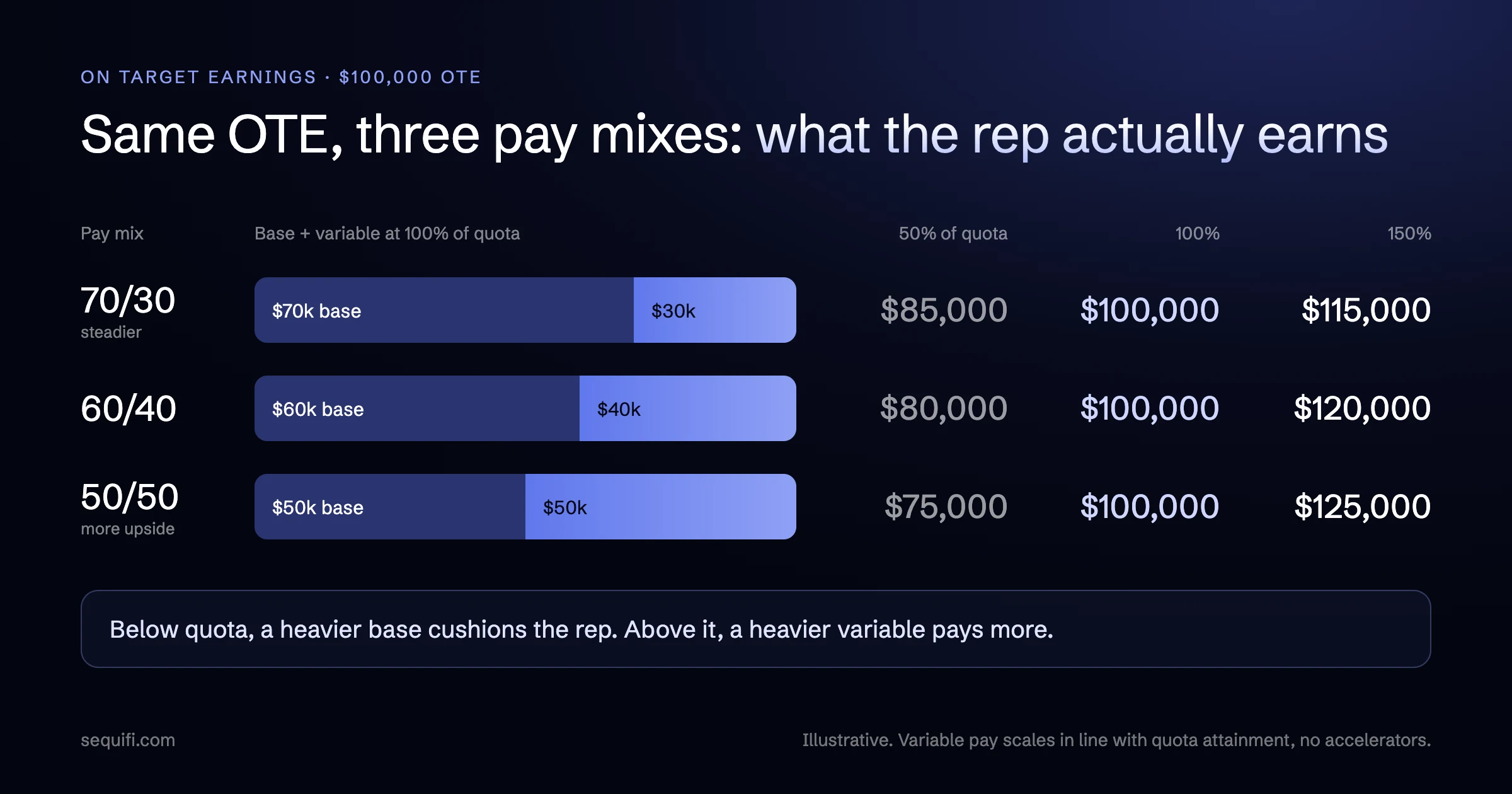
Best for: longer sales cycles, newer reps, and roles with non-selling duties. Pay mix is explained in our guide to on target earnings (OTE).
3. Tiered commission
The rate rises as the rep passes sales thresholds. Tiers can be marginal (each band at its own rate) or retroactive (all sales at the highest tier reached), and the difference is large.
Example: 5% up to $50,000, 7% to $100,000, 10% above. On $120,000 of sales, marginal tiers pay $8,000 and retroactive tiers pay $12,000.
Best for: rewarding top performers without overpaying on the first dollar. Try both in the commission calculator.
4. Gross margin commission
The rate applies to gross profit instead of revenue, so reps share in price discipline. Discounts cost the rep as well as the company.
Example: 40% of $6,300 gross profit pays $2,520.
Best for: businesses where reps influence price, such as roofing and solar. See the worked roofing example in roofing sales commission structures.
5. Flat commission per unit
A fixed dollar amount for each sale, install or activation, regardless of its value.
Example: $120 per fiber activation.
Best for: high-volume, similar-value sales such as fiber and pest control. See how fiber reps are paid.
6. Draw against commission
An advance paid each period and subtracted from commission earned. Recoverable draws are repaid from future commission; non-recoverable draws are forgiven.
Example: a $600 weekly draw.
Best for: ramping reps and seasonal or milestone-based pay. Full worked example in draw against commission.
7. Residual commission
Ongoing payments for as long as a customer stays, often a smaller upfront amount plus a monthly residual.
Example: $50 at signup plus $15 a month for 12 months.
Best for: subscription and recurring-service businesses that want reps to sell customers who stay.
8. Splits and overrides
A split divides one deal's commission between people, such as a setter and a closer. An override pays a manager a share of their team's sales on top of the reps' own commission.
Example: a $3,000 commission split 60/40 pays $1,800 and $1,200; a manager earns a 5% override on the team's gross profit.
Best for: team selling and multi-level sales organizations.
Revenue vs. Gross Profit: What to Pay On
Paying on revenue is simple and easy for reps to predict, but it rewards discounting. Paying on gross profit ties pay to what the company actually earns, but reps need to see the costs behind the number or they will not trust it. A common middle ground is a revenue rate with a margin floor, or margin-based tiers.
How to Choose a Commission Structure
- Start with the behavior you want: volume, margin, retention, a specific product, or new territory.
- Match pay timing to the sales cycle. Long cycles or milestone-based installs often need a base or a draw.
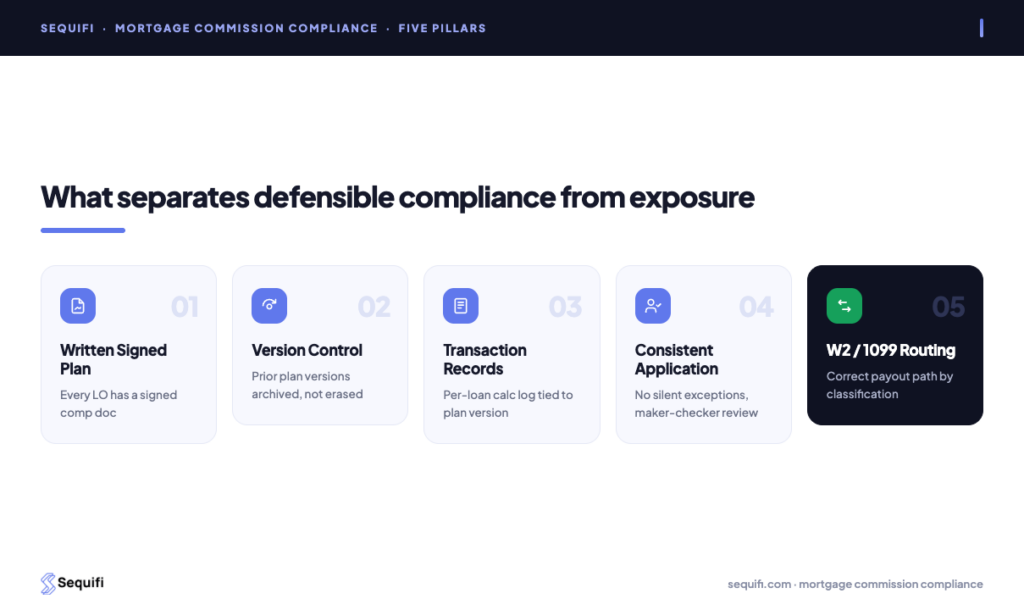
- Decide who carries the risk of cancellations, and write the clawback rules down.
- Keep it explainable. If a rep cannot predict their pay from the plan, they will dispute it.
- Model it before launch. Run last quarter's sales through the new plan to see what each rep would have earned.
Mistakes That Cause Commission Disputes
- Not stating whether tiers are marginal or retroactive.
- Paying on gross profit without showing reps the costs.
- Clawbacks that arrive months later with no itemized explanation.
- Changing the plan mid-period without a written effective date.
- Statements reps cannot check line by line.
Sequifi runs any of these structures, alone or combined, from your plan rules: tiers, gross margin, per-unit rates, draws, residuals, splits, overrides and clawbacks. Every rep sees how each payment was calculated, and it all flows into payroll. See Sequifi commission software or book a demo.
Frequently Asked Questions
What is a commission structure?
The rules that determine how a salesperson is paid for sales: what they are paid on, the rate, when commission is earned and paid, and how the rate changes with volume.
What is the most common commission structure?
There is no single standard. Base salary plus commission is widespread in roles with longer sales cycles, while straight commission and flat per-unit commission are common in door-to-door and field sales. Most plans combine several structures.
What is a tiered commission structure?
A structure where the commission rate increases as the rep passes sales thresholds. With marginal tiers, each band is paid at its own rate; with retroactive tiers, all sales are paid at the highest tier reached.
Is it better to pay commission on revenue or gross profit?
Revenue is simpler and more predictable for reps. Gross profit protects margin and discourages discounting, but only works if reps can see the costs behind it.
How do I calculate commission?
Multiply the amount the plan pays on (sale price or gross profit) by the commission rate. For tiered plans, apply each tier's rate according to whether the tiers are marginal or retroactive. A commission calculator can do this for you.
Related Reading
See Sequifi run your kind of pay.
Commissions, payroll and HR in one platform, built for teams where every paycheck is different.
Book a demo