How do door-to-door fiber sales reps get paid? Commission, draw, and bonus structures explained
Per-install pay, recurring bonuses, draws, tiered accelerators and churn clawbacks: how door-to-door fiber rep commission works and what drives rep turnover.
Quick Answer
Door-to-door fiber sales reps are usually paid a flat commission per activated install, sometimes with a recurring bonus tied to how long the customer stays on service. The examples in this guide use $80 to $200 per install; actual rates vary widely by provider, market and contract. Many providers pay new reps a draw against commission while they ramp, a weekly advance recovered against future installs. Tiered accelerators raise the rate once a rep passes a weekly or monthly install threshold, for example $120 per install for the first 10 and $160 for every install after that. Churn clawbacks, which recover commission when a customer cancels within a set window, are common and cause disputes when the calculation is not documented. Pay level is not the only thing that drives reps out: commission errors, unclear churn deductions and no real-time view of earnings do a lot of the damage.
How Fiber D2D Commission Structures Work
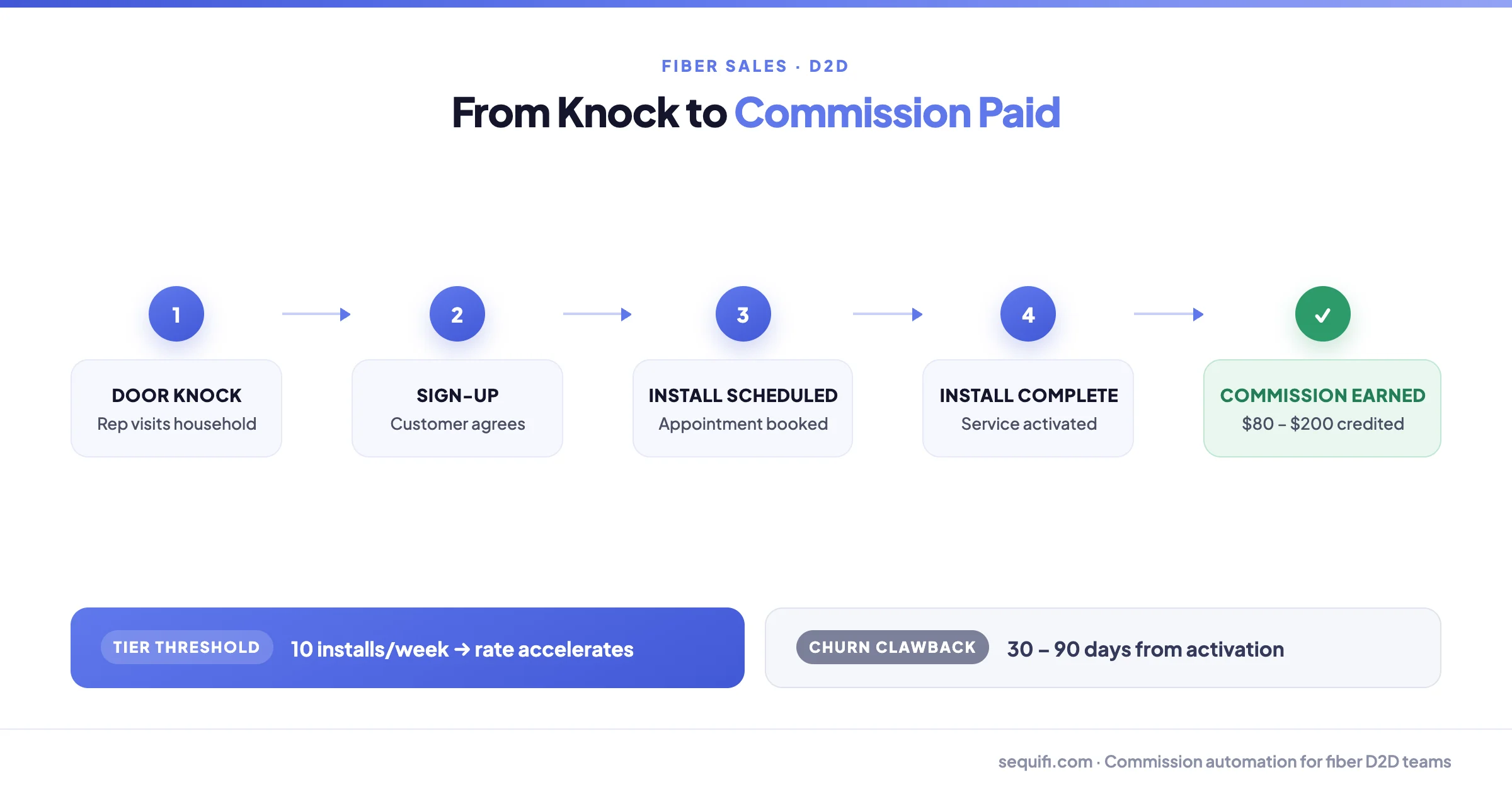
A fiber commission plan turns field activity, knocking doors, presenting service and getting a customer signed and scheduled, into a per-event payment. In fiber D2D the event is almost always the completed install: the customer's service is activated, and the rep earns commission at that point.
That is different from solar or mortgage, where a single deal is worth thousands of dollars and takes months. In fiber, a rep can go from first knock to booked install in one conversation, but each deal is worth less. At $100 to $150 per install, a rep closing 15 to 25 installs a week earns $1,500 to $3,750 a week in commission. Volume drives everything.
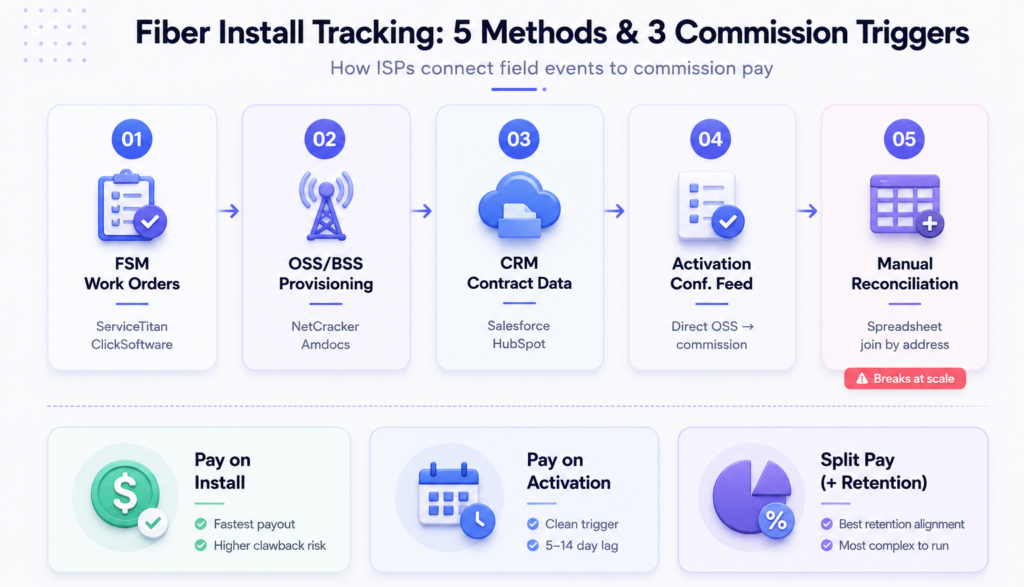
That only works for the rep if the install count is right and the statement arrives on time. One install that falls through a gap between the field CRM, the install scheduler and payroll (installs vs activations is a common one) costs the rep a full commission plus their own time to chase it. Repeat that across a team and a quarter, and tracking errors become a real driver of voluntary turnover.
Per-Install vs. Monthly Recurring Commission
The two most common models differ in when and how the rep is paid.
Per-install (flat)
The rep earns a fixed amount for each activated customer, set by product tier, territory and whether the rep is W2 or 1099. It is earned at activation and paid on the next weekly or biweekly cycle. It is easy to understand, but it puts churn risk on the provider: a rep can collect on an install and face no consequence if the customer cancels the next week.
Monthly recurring commission (MRC)
Some providers pay a smaller upfront commission plus a trailing monthly payment for each customer who stays, for example $50 at install and $15 a month for the first 12 months. That ties the rep's income to retention. It is harder to track and pay, but it lowers risk in high-churn territories and rewards reps for qualifying customers before signing them.
Hybrid
Many mature programs use a hybrid: a per-install payment for the activation plus a monthly or quarterly bonus tied to the rep's 90-day churn rate. Low-churn reps earn the bonus on top; high-churn reps do not. It rewards volume and quality together.
Draw Against Commission in Fiber Sales
A draw is a weekly advance paid to a rep ahead of their installs, a floor while they build a pipeline. It is most common during onboarding, when a new rep is working a new territory and install counts are low.
Take a $700 weekly draw. If the rep earns $1,200 in install commission that period, they receive the $700 draw plus a net $500. If they earn only $400, the $300 shortfall carries forward against future commission. That is a recoverable draw.
Draws in fiber create the same documentation problems as draws in solar. A rep who does not know whether the draw is recoverable, or what their running balance is, can end a slow stretch with no paycheck, or a deduction, and no warning. A plan with a draw should state in writing whether it is recoverable, how the balance carries forward, and when, if ever, an unpaid balance is forgiven.
Tiered Bonuses and Accelerators
Tiered accelerators are a common bonus structure in fiber D2D. The per-install rate rises once the rep passes a weekly or monthly threshold.
An illustrative tiered structure:
- Installs 1 to 9 per week: $110 per install
- Installs 10 to 14 per week: $140 per install
- Installs 15 and above per week: $175 per install
In a retroactive plan, crossing a threshold raises the rate on every install in the period. Under the tiers above, 9 installs pay $990, but 10 installs pay $1,400, because all ten move to $140. That is why a rep at 9 installs on Friday afternoon pushes hard for a 10th.
In a non-retroactive plan, the higher rate applies only to installs above the threshold. The same 10 installs would pay $1,130 (9 at $110 plus 1 at $140). The gap between the two models is significant, and reps who are unsure which one they are on will dispute their pay.
Sequifi applies your tier rules automatically each pay period, and reps can see every commission and how it was calculated, so a rep can check where they stand before the week closes. See how it works in our fiber commission software, or browse our integrations.
Churn Clawbacks and Customer Cancellations
Churn clawbacks are one of the most contentious parts of a fiber commission plan. When a customer cancels within a set window after activation, often 30 to 90 days, the provider recovers all or part of the commission paid on that install.
The logic is fair: a rep who signed an unqualified customer, or misrepresented the service to get an install, should not keep the full commission when that customer churns. The problem is execution. Churn clawbacks are often:
- Tracked manually, sometimes by a different team from the one that processes commission
- Communicated weeks or months after the cancellation, with no prior notice
- Taken as paycheck deductions without an itemized statement showing which customer, which install date and which commission is being recovered
A rep who earned $120 on an install in week 3 and sees a $120 deduction in week 14, with nothing linking the two, will assume it is a mistake and dispute it. Even when the clawback is correct, the dispute costs manager time and trust, and can push the rep toward the door.
A defensible churn clawback needs a written churn window and recovery formula, notice to the rep before the deduction, and an itemized record linking the recovery to the original install.
1099 vs. W2 Classification in Fiber Sales
Whether a D2D rep is an independent contractor (1099) or an employee (W2) shapes the commission plan and the provider's legal obligations.
1099 plans tend to pay higher per-install rates, because the rep pays self-employment tax, gets no benefits and carries income risk, usually with no draw. The provider saves on payroll taxes and workers' compensation but takes on classification risk if the rep works under its direction and depends on it for income.
W2 plans tend to pay lower per-install rates combined with a draw, benefits eligibility and tax withholding. The provider pays more per rep but carries less classification risk, and reps get more income stability.
The IRS and the Department of Labor apply multi-factor tests to decide whether a worker is an employee, regardless of what the contract says. Factors that point toward employee status include the company providing tools, training and scripts, assigning territory, and the rep relying on that one company for their income. Getting classification wrong can mean back taxes, penalties and wage claims. Many teams run 1099 and W2 reps side by side, which makes the plan design matter even more.
Why Commission Errors Drive Fiber Rep Turnover
Pay level matters, but commission errors, missing installs and unexplained deductions erode trust faster than a lower rate does.
A rep closing 20 installs a week is juggling dozens of conversations, objections, bookings and reschedules. They do not have time to audit their own statement. When an install goes missing, because the CRM did not sync, the scheduler logged a cancellation instead of a reschedule, or the cycle cut off before the install was confirmed, the rep sees the paycheck is short but often cannot tell which install is missing.
Say a rep expecting $2,400 receives $2,280 with no explanation for the $120 gap. They raise it with their manager, who checks with payroll. Days pass. The rep pulls their own install log and finds the install was there all along. They are made whole, but they trust the system less, and the next time a paycheck looks short they start updating their resume before they raise the dispute. Rep turnover is expensive: here is what losing a sales rep really costs.
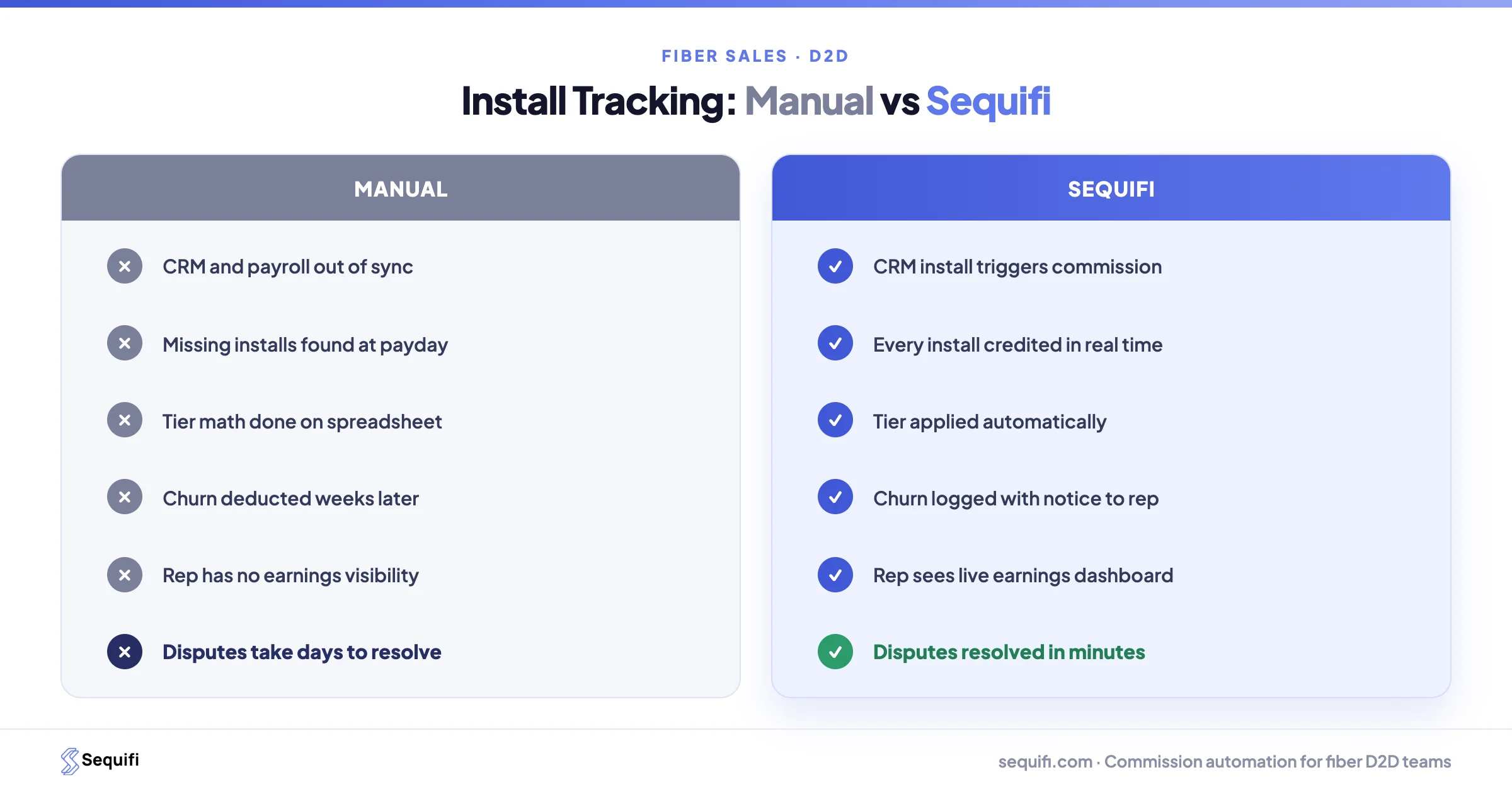
Sequifi reduces this by pulling install events from your connected systems into the commission engine, applying your plan rules each cycle, and showing reps every commission and how it was calculated, without waiting for the pay cycle to close. That kind of real-time pay transparency is what top reps now expect. See how Sequifi works for fiber teams, or book a demo.
Getting Started
For fiber providers and contractor operators reviewing their rep commission structure:
- Set per-install rates by product tier and territory. Reps in dense urban builds close differently from reps in greenfield suburban areas. Rates should reflect that.
- Choose a draw model, recoverable or non-recoverable, and document it. Every rep should sign their draw terms before their first paycheck.
- Set tier thresholds around realistic weekly goals. If your top reps average 18 installs a week, a threshold of 15 is achievable for strong performers without being out of reach for everyone else.
- Write the churn window and recovery formula into the comp plan. Not just the agreement's fine print. Reps should be able to explain their own clawback terms.
- Notify before every churn deduction. Identify the customer, install date and commission amount being recovered.
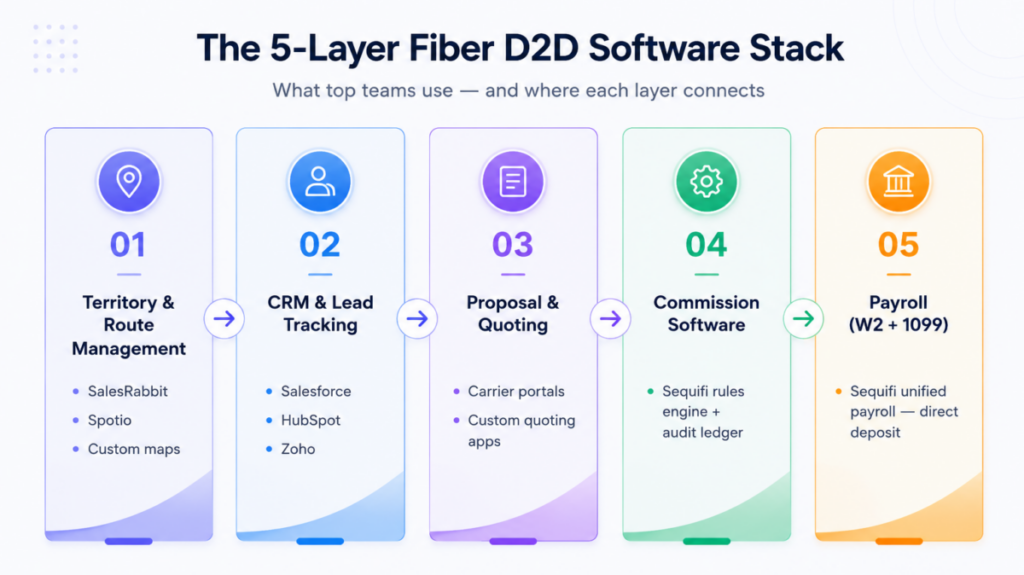
- Connect install data to your commission calculation. Manual install tracking is where most errors start. The sooner an install reaches the commission engine, the fewer errors you create.
See how Sequifi automates fiber rep commission in our fiber commission software.
Frequently Asked Questions
What is a typical fiber sales rep commission per install?
It varies widely by provider, product tier, territory density and whether the rep is 1099 or W2. The examples in this guide use $80 to $200 per activated install. 1099 reps tend to receive higher per-install rates because they cover their own taxes and benefits; W2 reps tend to receive lower rates combined with a draw and benefits eligibility.
How do tiered bonuses work in fiber D2D?
The per-install rate rises after the rep passes a weekly or monthly install threshold. In a retroactive plan, crossing the threshold raises the rate on every install in the period, including those already counted. In a non-retroactive plan, only installs above the threshold earn the higher rate. Reps should know which model they are on before their first pay period.
What is a draw against commission in fiber sales?
A draw is a weekly advance paid before installs are confirmed and paid. A recoverable draw is deducted from earned commission; if the rep earns less than the draw, the shortfall carries forward as a balance. A non-recoverable draw works like a guaranteed minimum and is not collected if commission falls short.
How do churn clawbacks work in fiber sales?
A churn clawback recovers all or part of a commission when the customer cancels within a set window after activation, often 30 to 90 days. It should be written into the plan before the rep starts selling, applied consistently, and communicated before any deduction hits the paycheck.
Should fiber D2D reps be 1099 or W2?
Classification depends on the actual working relationship, not just the contract. If the company assigns territory, provides training and scripts, and the rep relies on that one company for income, the IRS and Department of Labor may treat the rep as an employee regardless of a 1099 label. Get a legal review before deploying a D2D team.
Conclusion
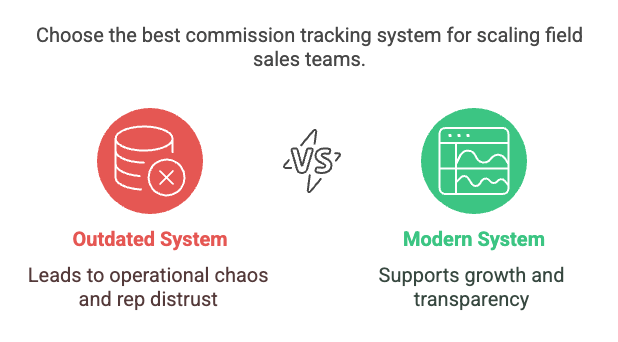
A fiber commission plan that is clear, consistent and visible in real time is one of the most effective ways to keep door-to-door reps. Reps who understand their per-install rate, tier thresholds, draw balance and churn exposure, and can check all of it without waiting for payday, have less reason to dispute, less reason to distrust and less reason to leave.
The investment is not in higher rates. It is in better tracking, faster payment and full transparency about how every dollar on a rep's paycheck was calculated.
See how Sequifi automates fiber sales rep commission in our fiber commission software.
Related Reading
- How Do Fiber Companies Track Installs vs Activations for Pay?
- Field Commissions at Scale: A Fiber Ops Leader’s Guide
- What tools do fiber sales teams use to manage commissions?
- What Software Do Fiber D2D Teams Use?
- How do you eliminate commission disputes?
Industry Resources
See Sequifi run your kind of pay.
Commissions, payroll and HR in one platform, built for teams where every paycheck is different.
Book a demo