How do commission accelerators and tiers work for sales reps?
Commission accelerators raise a rep's rate once they pass quota, paid in marginal tiers. Learn how tiers, caps and clawbacks interact, and how Sequifi helps.
Direct Answer
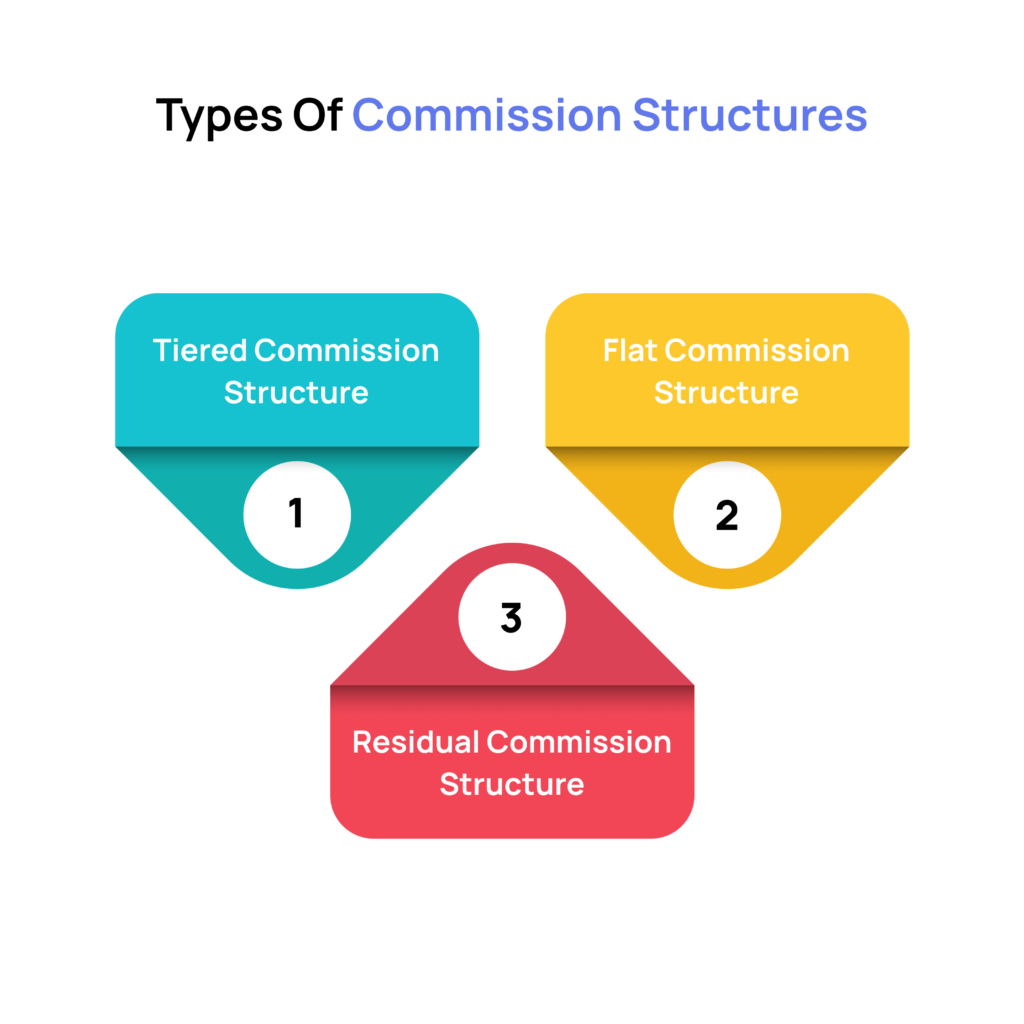
A commission accelerator raises a rep's commission rate once they pass a performance threshold, usually quota. Most plans use marginal tiers: each rate applies only to the sales inside its band, like tax brackets. A rep might earn 10% up to quota, 15% from 100% to 150%, and 20% above that. Accelerators reward overperformance, but they need clear tier boundaries, a measurement period, and rules for cancellations.
Breakdown
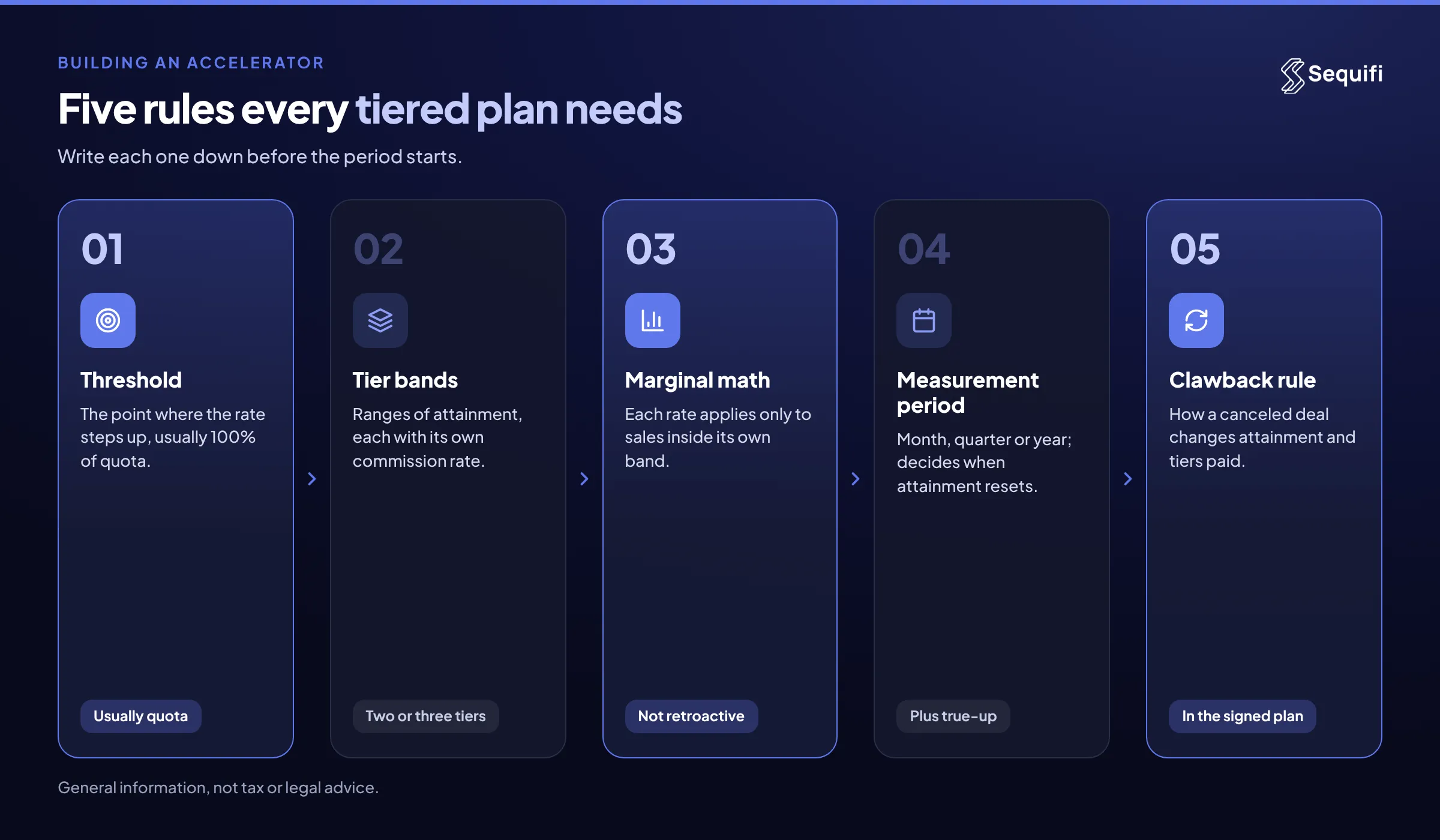
- Threshold: the point where the rate steps up, usually 100% of quota, sometimes a unit count.
- Tier bands: the ranges of attainment that each carry their own rate.
- Marginal vs retroactive: marginal pays the higher rate only on sales above the line; retroactive reprices every sale.
- Measurement period: month, quarter or year; it decides when attainment resets.
- Decelerators and caps: lower rates below a floor, and limits on the top tier.
- Clawback rules: how a canceled deal changes attainment and tiers already paid.
Deep Dive
Accelerators exist to change behavior near the finish line. Without one, a rep who hits quota in week ten has little reason to push hard in weeks eleven and twelve, and a good reason to hold deals for next period. A higher rate above quota makes the next deal worth more than the last one. The Harvard Business Review article Motivating Salespeople: What Really Works makes a similar point: overachievement pay keeps strong performers selling after they hit their number.
Revenue-based tiers. In inside sales, mortgage and insurance, tiers are usually measured on revenue, margin or loan volume against quota. A common shape is a base rate up to 100% of quota, a higher rate from 100% to 150%, and a top rate above 150%. Some plans add a decelerator: a lower rate below 50% of quota, so the plan does not overpay on weak periods.
Unit-based tiers. In solar, fiber, pest control and home services, the threshold is often a count. A fiber rep might earn one flat amount per activation for the first 20 activations in a month and a higher amount for every activation after that. The logic is the same: the band sets the rate.
Marginal beats retroactive for most teams. In a marginal plan, crossing a tier changes the rate only on sales above the line. In a retroactive plan, crossing the line reprices every sale in the period. Retroactive plans create a cliff. One deal can swing a rep's check by thousands of dollars, which invites deal timing, sandbagging and disputes. Marginal plans scale smoothly and are easier to explain.
Measurement period matters as much as rates. A monthly period pays faster but punishes lumpy sales cycles. A quarterly or annual period smooths results, but reps wait longer to see accelerated pay. Many teams measure attainment quarterly and pay monthly at the rate earned so far, then true up at quarter end. Write down how that true-up works before the first payout.
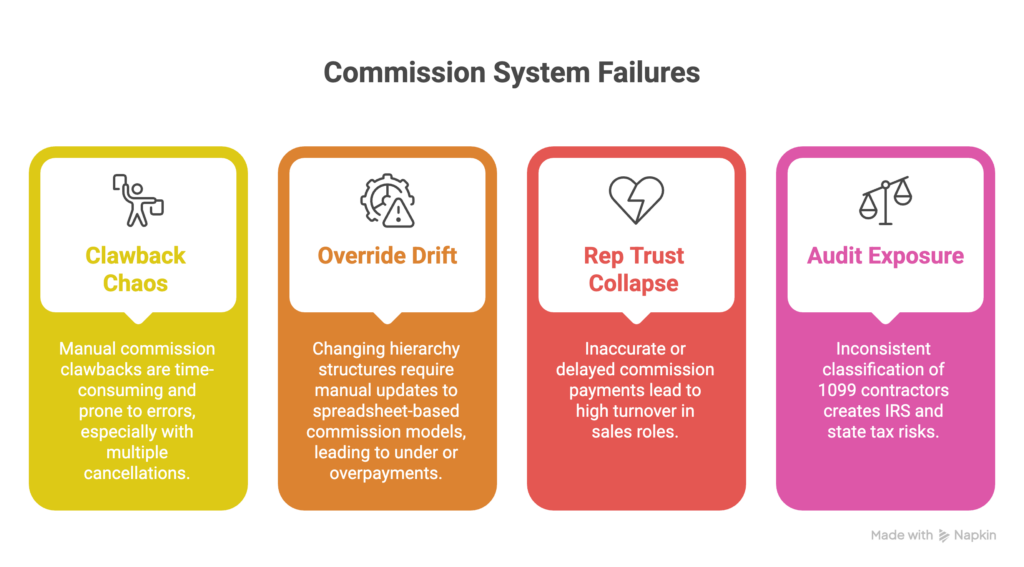
Cancellations change the math. If a deal that pushed a rep into a higher tier is canceled, two things move: the commission on that deal, and possibly the tier itself. The plan needs to say whether the clawback is taken at the rate originally paid or recalculated from adjusted attainment. Our post on handling commission clawbacks covers the options, using mortgage as the example.
Overtime still applies. For non-exempt W2 reps, the U.S. Department of Labor's overtime guidance explains that most commissions count toward the regular rate used for overtime, and accelerated commission is no exception. This is general information, not tax or legal advice.
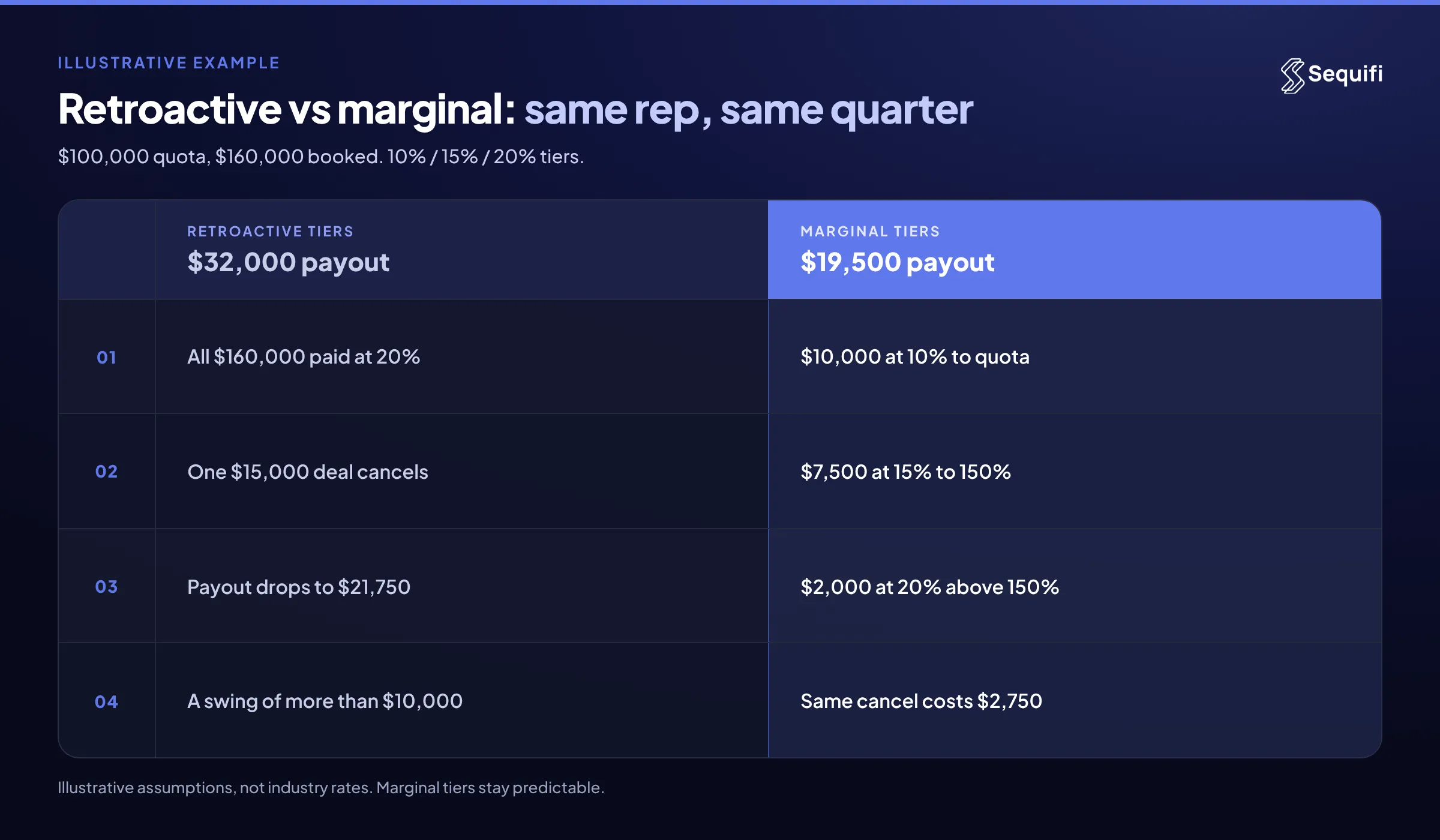
Worked example (illustrative). These numbers are assumptions, not industry rates. A rep has a $100,000 quarterly quota and books $160,000. The plan pays 10% up to quota, 15% from 100% to 150%, and 20% above 150%.
- First $100,000 at 10%: $10,000
- Next $50,000 at 15%: $7,500
- Last $10,000 at 20%: $2,000
- Total marginal commission: $19,500
Under a retroactive plan with the same rates, all $160,000 would be paid at 20%, or $32,000. If one $15,000 deal then canceled, attainment would fall to 145% and the retroactive payout would drop to $21,750 (15% on $145,000), a swing of more than $10,000 from one deal. Under the marginal plan, the same cancellation reduces pay by $2,750. That gap is why most operators choose marginal tiers.
For the fundamentals behind these numbers, see how to calculate commissions for sales reps and how to set up a commission structure for a sales team.
What Breaks at Scale
At 50 reps, one plan with three tiers fits in a spreadsheet. A sales ops lead tracks attainment by hand and recalculates when a deal cancels. Mistakes happen, but they are easy to find.
At 200 reps, plans multiply. New hires have ramped quotas, managers earn overrides on team attainment, and different regions use different thresholds. Each cancellation can move a rep across a tier boundary, so one correction becomes several. Reps cannot see their attainment in real time, so they build their own trackers and dispute any number that does not match.
At 500 reps, the organization runs dozens of plan variants across W2 and 1099 workers, with mid-period plan changes and quarter-end true-ups. Tier logic lives in formulas only one person understands. Payroll receives a commission file that has already been edited by hand. Accelerators, the part of the plan meant to motivate top performers, become the part they trust least. See how to manage complex commission structures for the operating model that holds up.
How Sequifi Solves This
Sequifi is built for any high-velocity sales org with multi-trigger comp plans, including solar, fiber, pest control, mortgage, insurance and inside-sales teams.
- Multi-trigger commission engine. Tiers, accelerators, ramps, overrides and clawbacks are set as rules, so a canceled deal recalculates attainment and pay automatically.
- Commissions and payroll in one system. Accelerated commission flows into the same payroll run as base pay for W2 and 1099 reps, with no spreadsheet handoff.
- Rep-facing transparency. Reps see current attainment, the tier they are in and what the next deal is worth before payday.
The result is an accelerator that does its job: reps can see exactly what overperformance pays.
Frequently Asked Questions
What is a commission accelerator?
A commission accelerator is a higher commission rate that applies once a rep passes a threshold, usually 100% of quota. It rewards overperformance and gives reps a reason to keep selling after they hit their number. Accelerators are usually built as tiers, with a new rate for each band of attainment, and they are measured over a set period such as a month or quarter.
What is the difference between marginal and retroactive tiers?
In a marginal plan, each rate applies only to sales inside its band, so crossing a tier raises the rate on future sales only. In a retroactive plan, crossing a tier reprices every sale in the period at the higher rate. Retroactive plans create large swings from a single deal, which encourages deal timing and disputes. Most operators prefer marginal tiers because they are predictable and easy to explain.
Should commission plans have a cap?
Most experienced sales leaders avoid hard caps, because a cap tells top performers to stop selling. If finance needs protection against windfalls, use softer tools: a lower rate on very large single deals, a review threshold for unusual deals, or a top tier that does not keep rising. Whatever you choose, put it in the signed plan before the period starts.
How many commission tiers should a plan have?
Two or three tiers cover most teams: a base rate to quota, an accelerated rate above quota, and sometimes a top rate for exceptional performance. More tiers add complexity without much added motivation, and they make attainment harder for reps to track. If you need many tiers to make the math work, the quota or base rate is probably set wrong.
How do clawbacks affect accelerated commission?
When a deal cancels, it lowers attainment, which can drop a rep into a lower tier. The plan should state whether the clawback is taken at the rate originally paid or recalculated from adjusted attainment. Recalculating is more accurate but needs a system that can rerun the period. State the rule in writing so reps know what a cancellation will cost them.
Conclusion
Commission accelerators work when the rules are simple and visible: a clear threshold, marginal tiers, a fixed measurement period, and a written rule for cancellations. They fail when reps cannot see where they stand or when one canceled deal rewrites a paycheck. As a next step, take your current plan and run last quarter's top three reps through it by hand, including one canceled deal each. If the math takes more than a few minutes or the result surprises you, fix the plan before next quarter. To see how tiered commissions and payroll run together, visit Sequifi.
See Sequifi run your kind of pay.
Commissions, payroll and HR in one platform, built for teams where every paycheck is different.
Book a demo