How do solar companies handle installs vs closed deals in pay?
Solar companies pay reps an advance at close and the balance at install, with clawbacks on cancels. How milestone pay works, a worked example, and what breaks at scale.
Direct answer
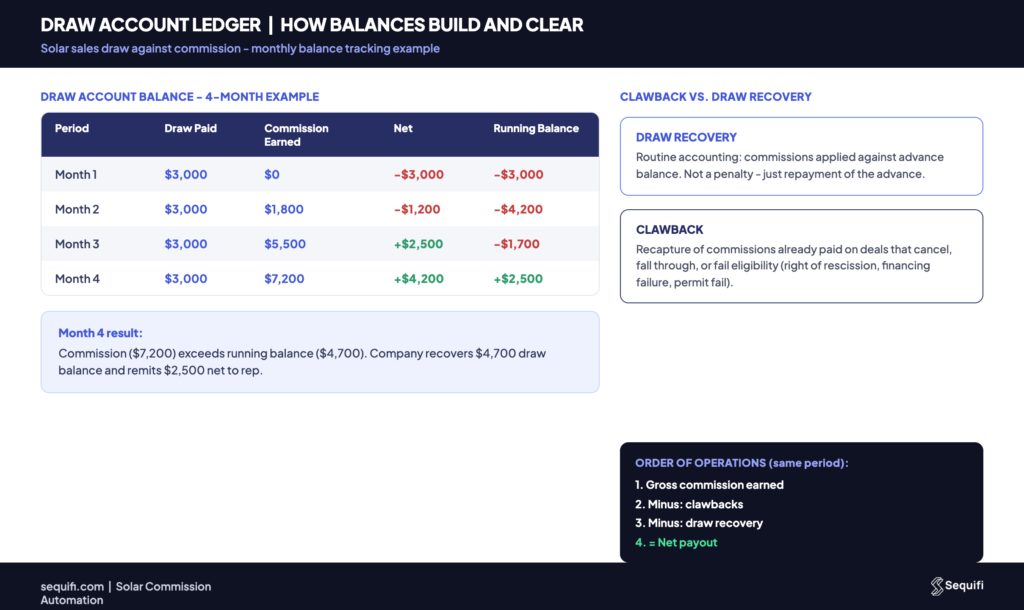
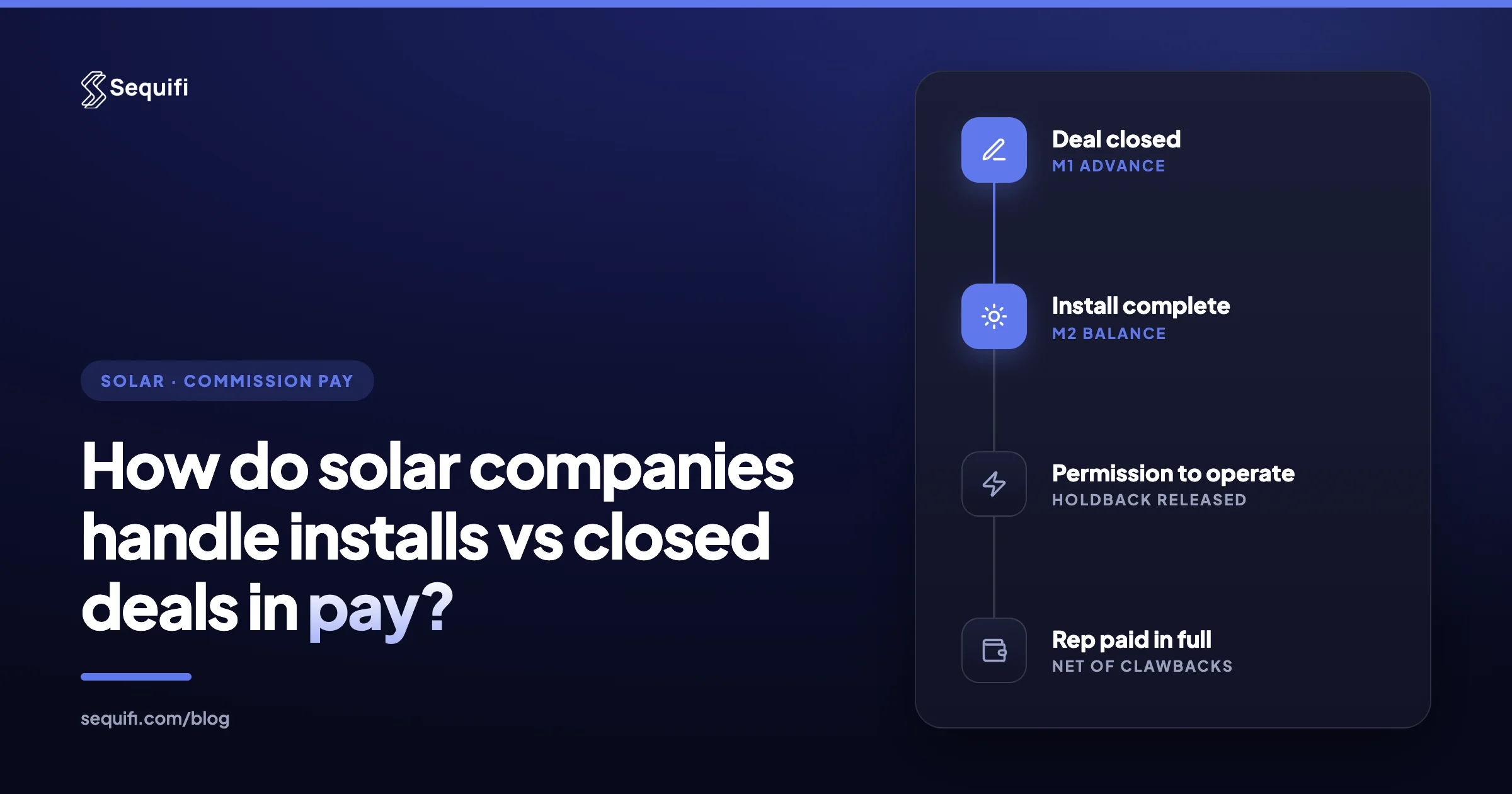
Most solar companies split a rep's commission into milestones. A first payment, often called M1, releases when the contract is signed and clears a check like site survey or financing approval. The balance, M2, pays when the system is installed, and some plans hold a final slice until permission to operate. If a deal cancels before install, the advance is clawed back. The math is simple. Tracking every deal's status for months is not.
Breakdown
- Close milestone (M1): a flat advance or a share of expected commission, paid once the deal passes a check such as credit approval or site survey.
- Install milestone (M2): the remaining commission, recalculated on final system size, price, and adders, paid when installation is complete.
- PTO holdback: an optional final payment released when the utility grants permission to operate.
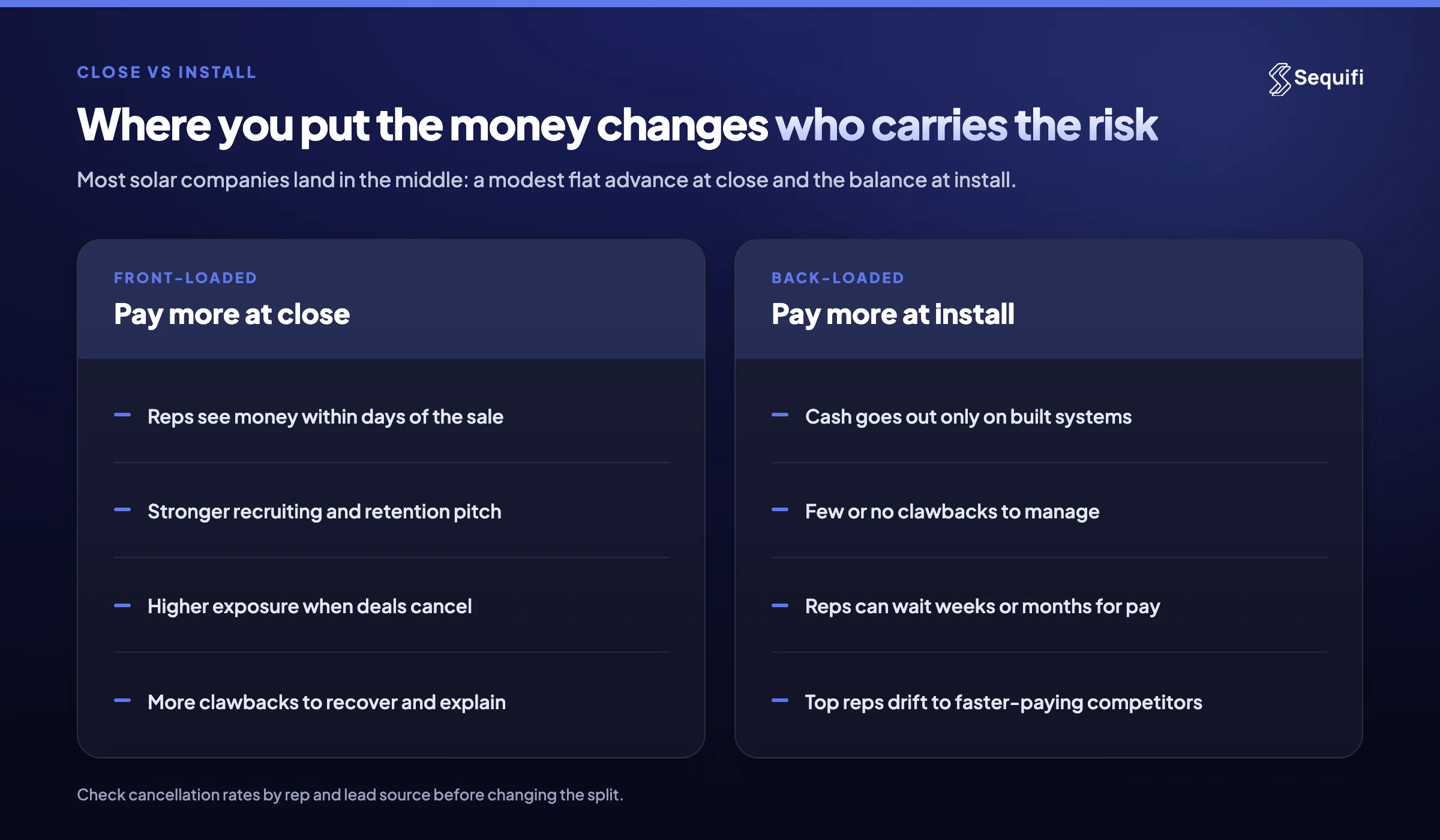
- Clawbacks: recovery of advances when a deal cancels, gets downsized, or fails financing, usually netted against future pay.
- Recalculation rules: how commission changes when kW size, price per watt, or dealer fees shift before install.
- Override timing: whether manager overrides follow the same milestones as the rep's pay.
Deep dive
The split exists because of the gap between signature and install. A residential solar deal can sit for weeks or months while the company handles design, permitting, HOA approval, financing, and utility interconnection. Reps, many of them 1099 contractors working on pure commission, will not wait a full quarter to get paid. Companies, on the other hand, cannot afford to pay full commission on deals that may never get built. Milestone pay is the compromise. (For a wider view of the plan types involved, see how solar companies pay commissions.)
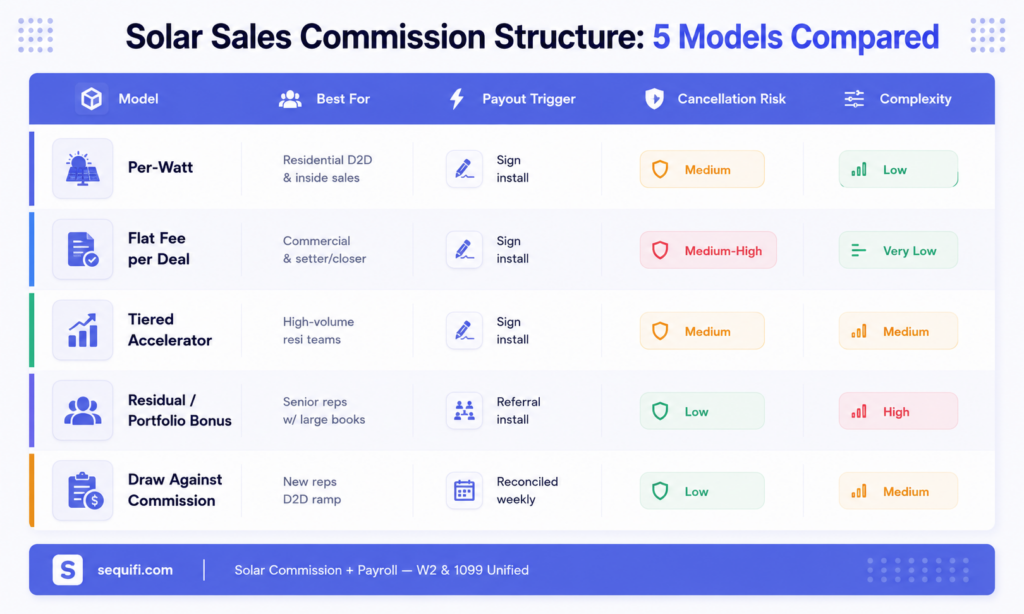
Three models show up most often:
- Flat advance, true-up at install. The rep gets a fixed amount, say $1,000 to $1,500 per deal, once the deal clears survey. Everything else pays at install. It is the simplest to run and explain.
- Percentage split. The rep gets a set share of projected commission at close (40% or 50% is common) and the rest at install. It feels fairer on large systems but creates bigger clawbacks when deals fall through.
- Install-only with a draw. Nothing pays until install, but new reps get a recoverable draw to cover the ramp. It protects cash but shifts risk to the rep.
Which one fits depends on your cancellation rate, your cash position, and how competitive rep recruiting is in your market. Our post on the best commission structure for solar sales reps compares the underlying plan types in more detail.
Worked example (illustrative). A rep sells an 8 kW system at $3.50 per watt against a $2.60 redline. Projected commission is ($3.50 - $2.60) × 8,000 W = $7,200. The plan pays a $1,500 flat M1 once site survey passes, holds 10% of total commission until PTO, and pays the rest at install.
During design, shading cuts the system to 7.2 kW. Commission is recalculated: $0.90 × 7,200 W = $6,480. The PTO holdback is $648. M2 at install is $6,480 - $1,500 - $648 = $4,332. The final $648 pays when the utility signs off.
Now suppose the homeowner cancels two weeks before install. The $1,500 advance is recovered from the rep's next payout. If the rep's manager earned a $0.10 per watt override on the M1 portion, that override has to be reversed too. One cancellation touches at least two paychecks.
Adders complicate this further. Batteries, roof work, and panel upgrades change the price, and financing dealer fees cut what the company nets. Your plan needs a written rule for each: does the rep earn on adders, and who absorbs a dealer fee increase after close? Ambiguity here is the root of most solar pay disputes.
Clawback terms deserve the same precision. Define the window (before install only, or up to a set number of days after), whether recovery is full or partial, and how it is collected. For W-2 reps there is a legal layer: under the federal Fair Labor Standards Act, deductions generally cannot push a nonexempt employee's pay below minimum wage, and many states restrict wage deductions further. Review clawback language with employment counsel before you roll it out.
The pattern is not unique to solar. Fiber teams pay on sale versus activation (how fiber companies track installs vs activations), roofing pays on contract versus completion, and pest control pays on sold versus serviced. Solar is the extreme case: the gap is long and the dollars are large. SEIA's solar industry research tracks residential install volume over time.
What breaks at scale
At 50 reps, a spreadsheet with a status column works, barely. An ops lead flips deals from "sold" to "installed" weekly and calculates M2. Recalculations on changed system sizes get missed, but someone usually catches them.
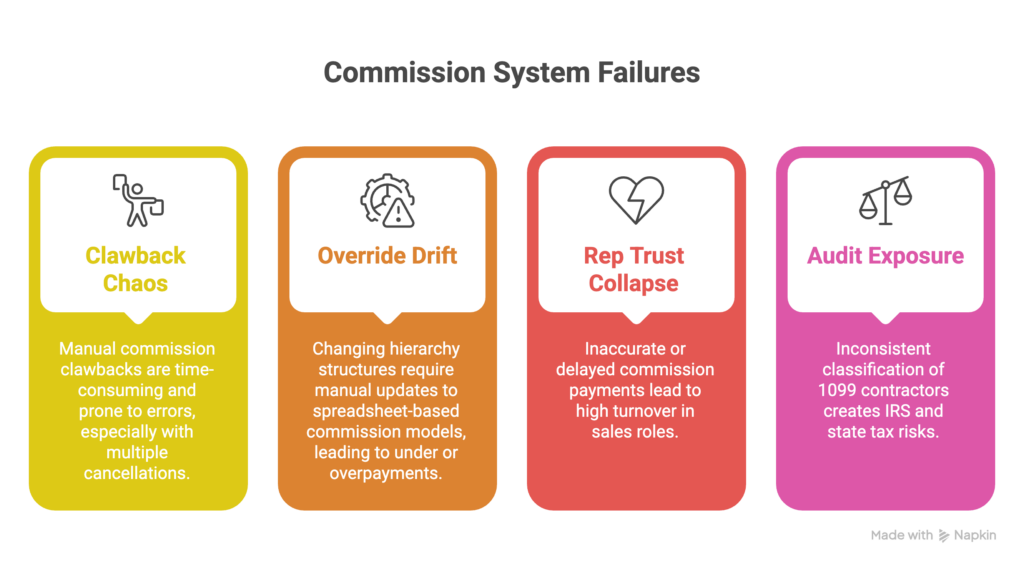
At 200 reps, there are thousands of open deals sitting at different milestones. Install data arrives late or in a different format from each partner. Duplicate M1 payments slip through. M2s get missed for weeks. Clawbacks are applied to some reps and forgotten for others, which reps notice immediately.
At 500 reps, you have multiple install partners, multiple states, and two or three override levels on every deal. A single milestone event can trigger four or five payments across W-2 and 1099 workers. Payroll becomes a multi-day reconciliation, and reps keep their own shadow spreadsheets because they no longer trust the statement.
How Sequifi solves this
Sequifi is built for any high-velocity sales org with multi-trigger comp plans, including solar, fiber, pest control, and home services. Three capabilities matter most for install-versus-close pay:
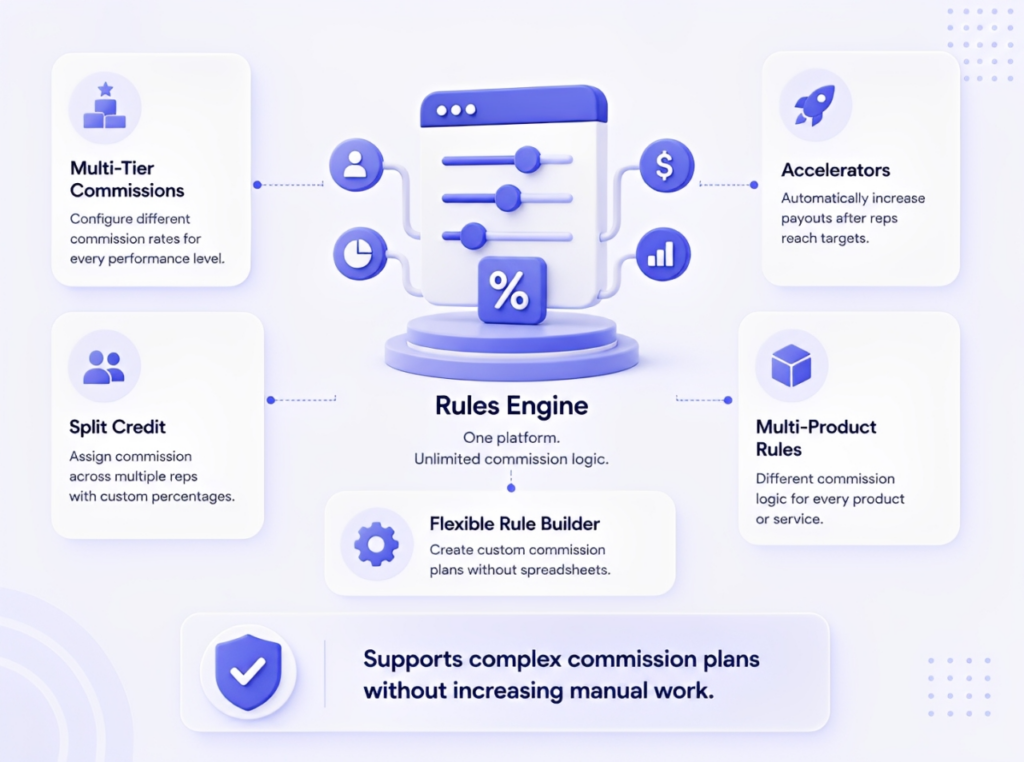
- Multi-trigger commission engine. Configure close, install, and PTO as separate pay triggers, with recalculation rules for size and price changes and automatic clawbacks and override reversals when a deal cancels.
- Same-day pay on qualifying events. When a deal hits a milestone, the payment can go out that day instead of waiting for the next cycle. See how companies pay reps faster.
- Unified W-2 and 1099 payroll with rep-facing transparency. Commission and payroll run in one system, and reps see each deal's milestone status and next payment.
Frequently asked questions
What do M1 and M2 mean in solar sales?
M1 and M2 are shorthand for the first and second milestone payments on a solar deal. M1 usually pays after the contract is signed and clears a check such as site survey or financing approval. M2 pays the remaining commission once the system is installed. Some companies add an M3 tied to permission to operate or activation. Definitions vary, so write them into every comp plan.
How long does it take a solar rep to get paid for an install?
It depends on the install timeline and the pay cycle. Residential installs commonly take anywhere from several weeks to a few months after signing, depending on permitting, HOA review, and interconnection. Many companies then pay M2 on the next weekly or biweekly run. Companies that pay on qualifying events can release M2 within a day of install confirmation.
What happens to a rep's commission if a solar deal cancels?
If a deal cancels before install, most plans claw back the M1 advance, usually by netting it against the rep's future commissions rather than asking for a repayment. Any override paid on that deal should be reversed too. For W-2 reps, federal and state wage deduction rules apply, so clawback terms should be reviewed by counsel.
Should manager overrides be paid at close or at install?
Most companies tie overrides to the same milestones as the rep's commission, so the manager's M1 override pays when the rep's M1 pays. That keeps incentives aligned and makes clawbacks symmetrical. Paying full overrides at close is riskier: a cancellation means recovering money from several people instead of one. Document the rule and apply it consistently.
Is it better to pay solar reps at close or at install?
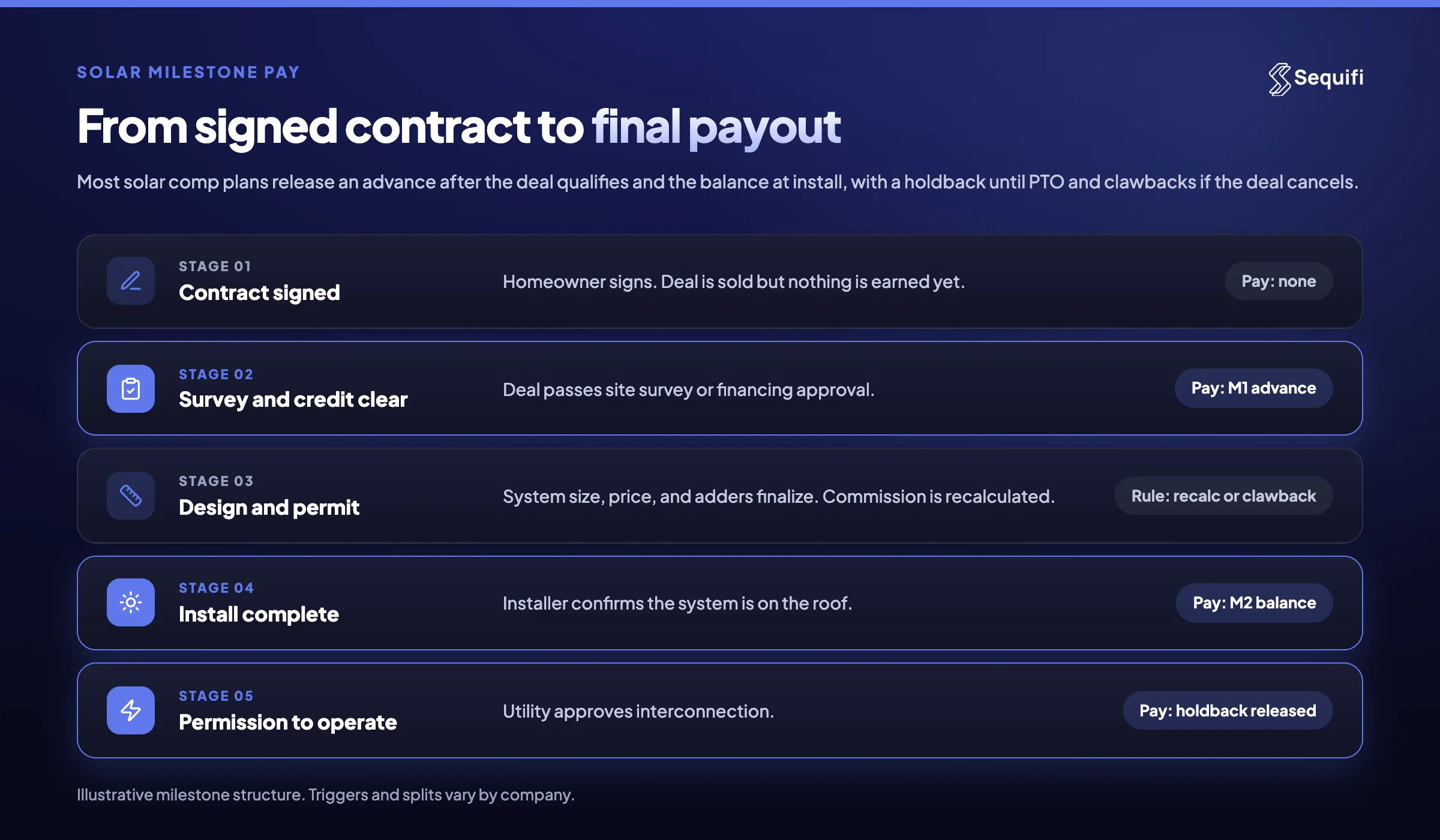
Paying more at close helps recruiting and retention because reps see money sooner, but it raises your exposure to cancellations. Paying mostly at install protects cash but can push your best reps toward competitors who pay faster. Most companies land on a modest flat advance at close and the balance at install. Check cancellation rates by rep and lead source before changing the split.
Conclusion
Solar companies handle installs versus closed deals by splitting pay into milestones: an advance at close, the balance at install, and sometimes a holdback until PTO, with clawbacks when deals fall through. The structure is standard. Running it accurately across hundreds of reps, install partners, and override levels is where most teams struggle. If you are still flipping deal statuses in a spreadsheet and recalculating M2 by hand, start by mapping every pay trigger in your current plan. Then see how Sequifi can turn those triggers into automatic, same-day payouts your reps can verify themselves.
See Sequifi run your kind of pay.
Commissions, payroll and HR in one platform, built for teams where every paycheck is different.
Book a demo