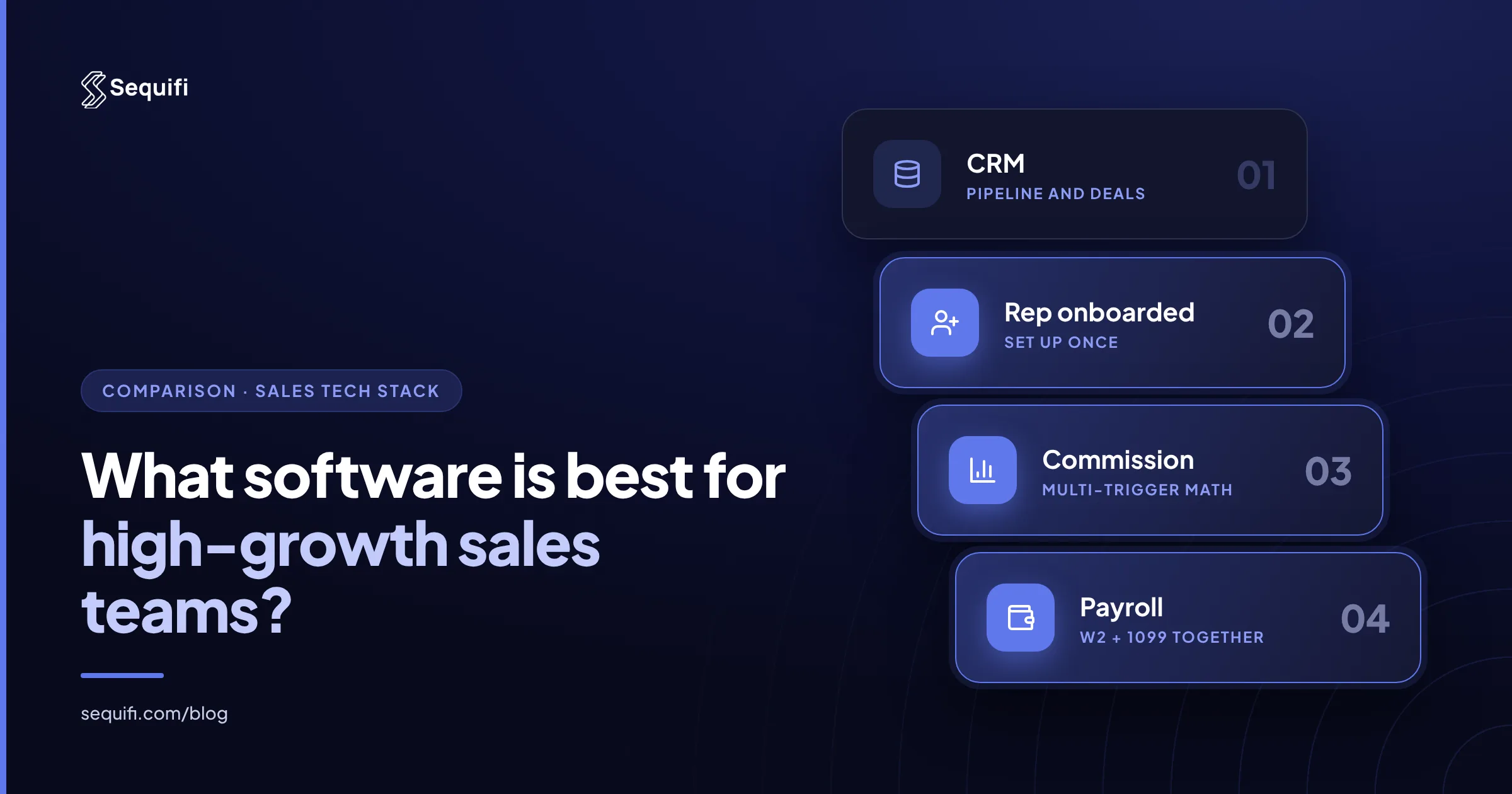
How important is pay transparency for sales teams?
Pay transparency decides whether sales reps trust their checks. Learn what to show reps, what breaks at scale, and how Sequifi shows pay deal by deal.
Direct answer
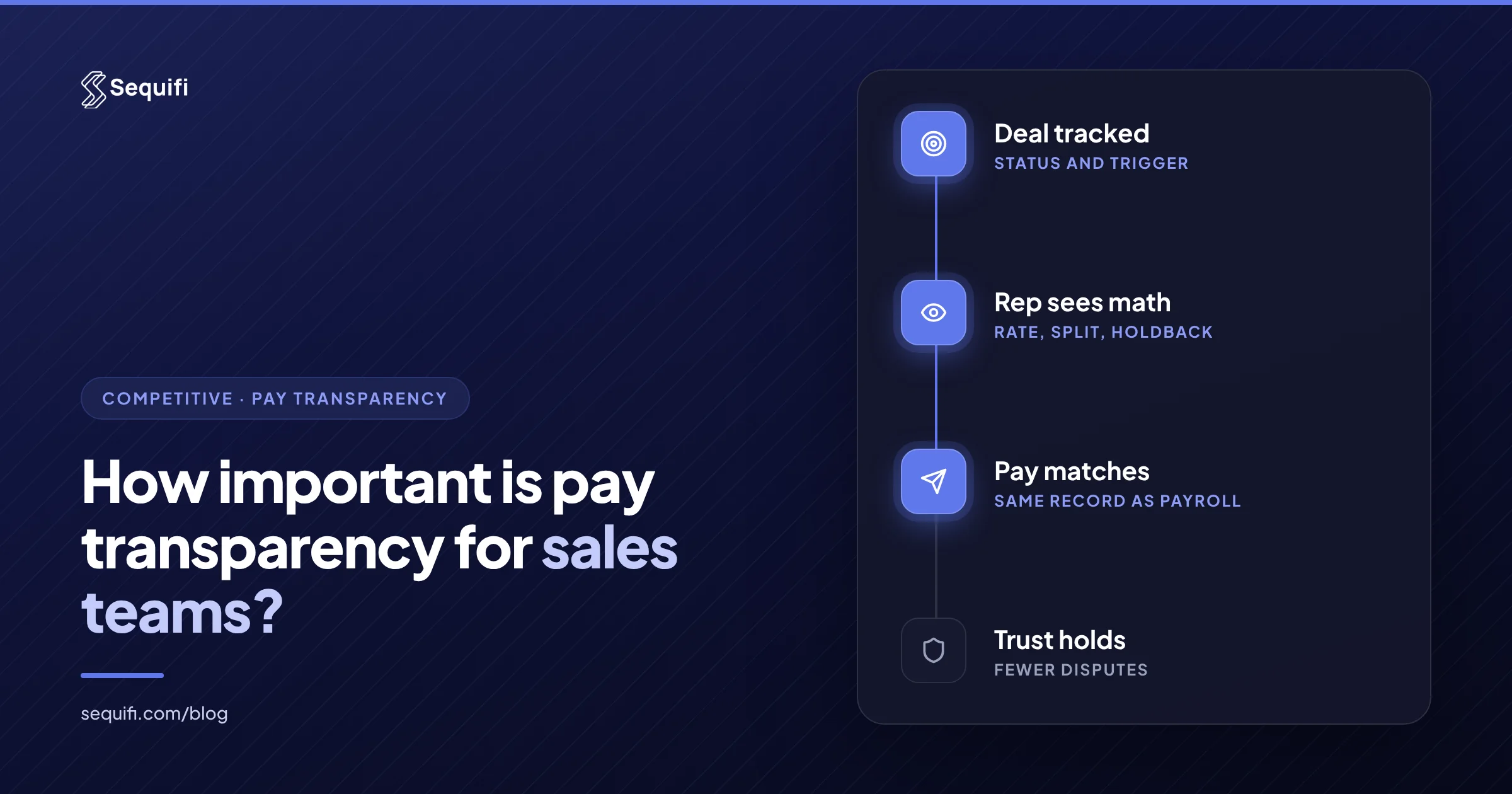
Pay transparency is one of the most important trust levers a sales team has. When reps can see how every commission was calculated, what is pending, and why, disputes drop, top performers stay, and managers stop acting as a help desk. For commission-heavy teams, transparency means more than publishing a plan. It means showing each rep their pay deal by deal, with the trigger, rate, holdback, and payment date, before payday rather than after.
Breakdown
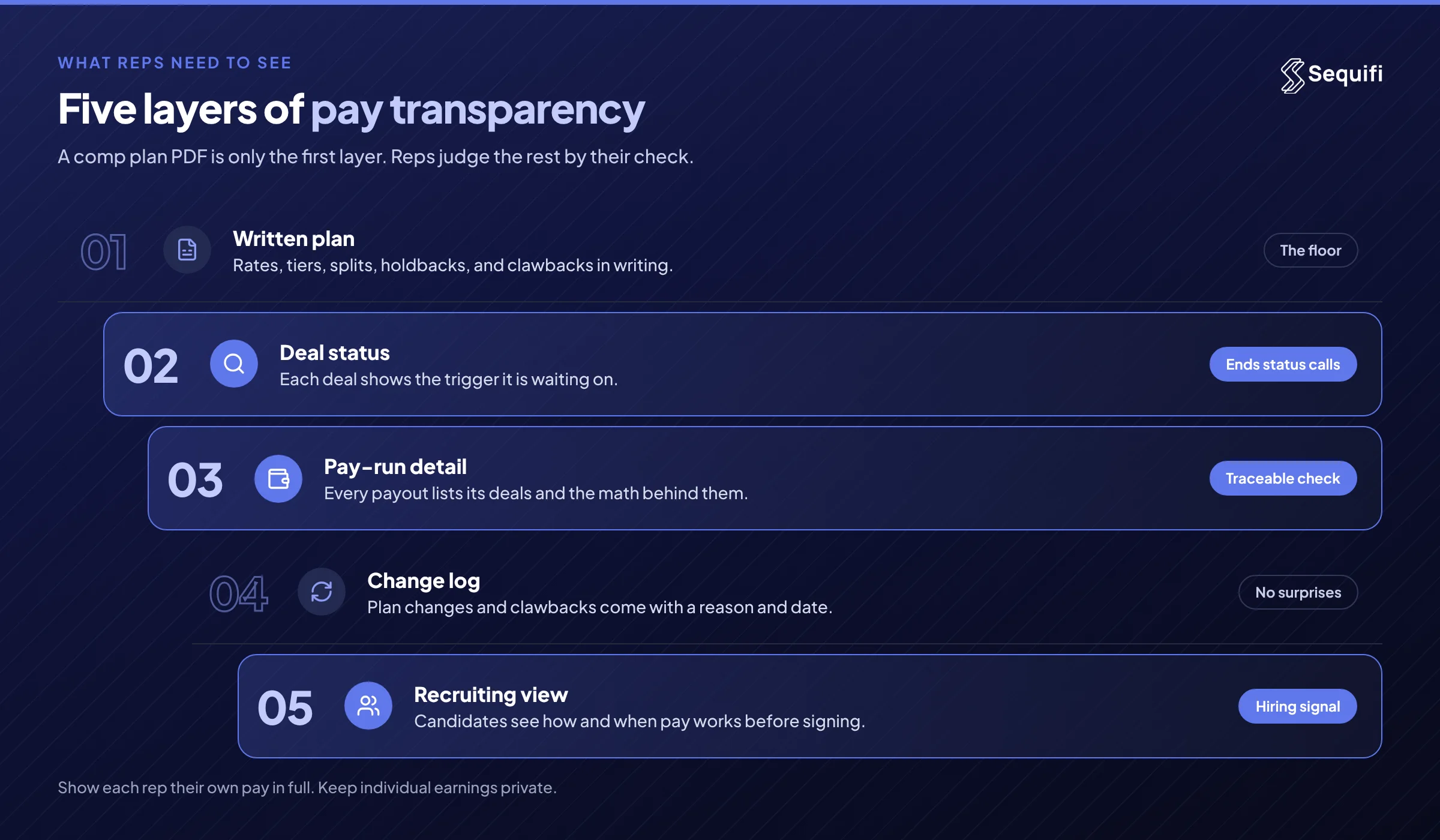
- Plan transparency: every rep can read the written rules for rates, tiers, splits, overrides, holdbacks, and clawbacks.
- Deal-level visibility: each deal shows its status, the trigger it is waiting on, and the amount it will pay.
- Pay-run transparency: each payout lists the deals in it, the math behind them, and any adjustments.
- Change transparency: plan changes, clawbacks, and corrections come with a reason and a date.
- Recruiting transparency: candidates see how and when they get paid before they sign.
- Limits: reps see their own pay and team rollups they are entitled to, not everyone's private earnings.
Deep dive
A shared PDF of the comp plan is transparency on paper. In practice, reps judge it by one question: can I see why this check is this amount?
Commission pay is hard to verify by default. A salaried employee can check a paycheck in seconds. A rep on a multi-trigger plan cannot. One check might include a close bonus on one deal, an install payment on another, an override from a teammate, a tier bump, and a clawback for a cancellation from last month. If the pay stub shows one commission line, the rep has to rebuild it from memory or a personal spreadsheet. When their number differs from yours, they assume they were shorted. We cover the root causes in why sales reps don't trust their commissions.
Most "pay questions" are really status questions. In solar, a rep wants to know whether the install happened. In fiber, whether the account activated. In mortgage, whether the loan funded. In pest control and home services, whether the customer's first service was completed or canceled. None of these are disputes. They are missing information. When reps can see the status themselves, the question never reaches a manager.
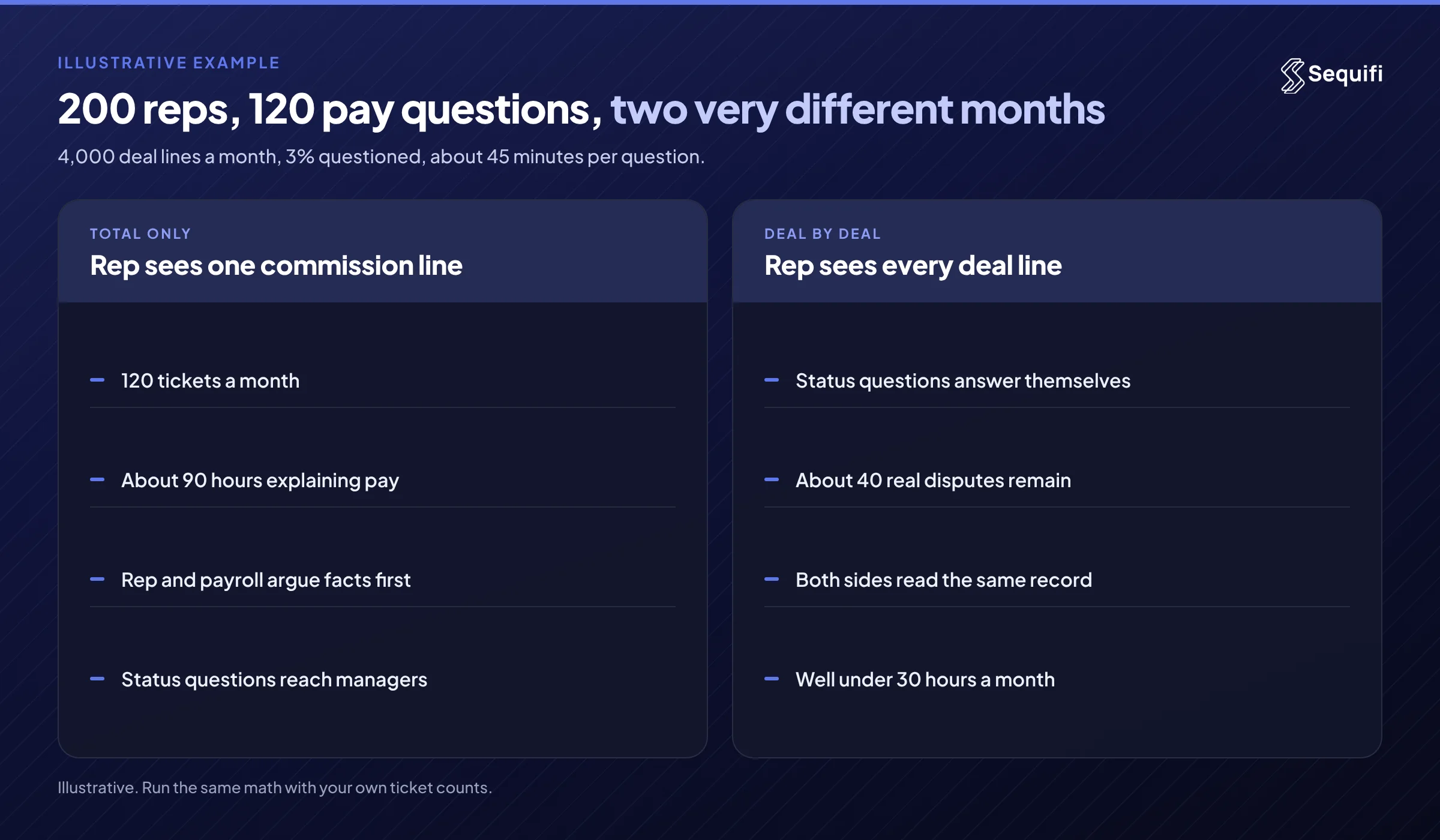
Worked example (illustrative). Take a 200-rep team where each rep has about 20 deals in motion per month. That is 4,000 deal lines. Suppose 3% of lines generate a question each month: 120 tickets. If each one takes about 45 minutes across the rep, the manager, and payroll, that is about 90 hours a month spent explaining pay.
Now give reps a deal-level view showing status, trigger, rate, and expected pay date. Suppose two-thirds of those questions were status questions ("has this installed yet?"). Those disappear. The remaining 40 tickets are real disagreements. At the same 45 minutes each, that is 30 hours, and each one is faster to resolve because both sides are looking at the same record. Hours spent on pay questions drop from about 90 to well under 30. The numbers are assumptions; run the same math with your own ticket counts.
Transparency shortens disputes, not just their number. When a rep and a payroll admin argue from two spreadsheets, the first hour is spent agreeing on the facts. When both see the same deal record, the argument starts at the actual issue: a split percentage, a tier threshold, or a cancellation date. Our guide on how to eliminate commission disputes walks through the process side.
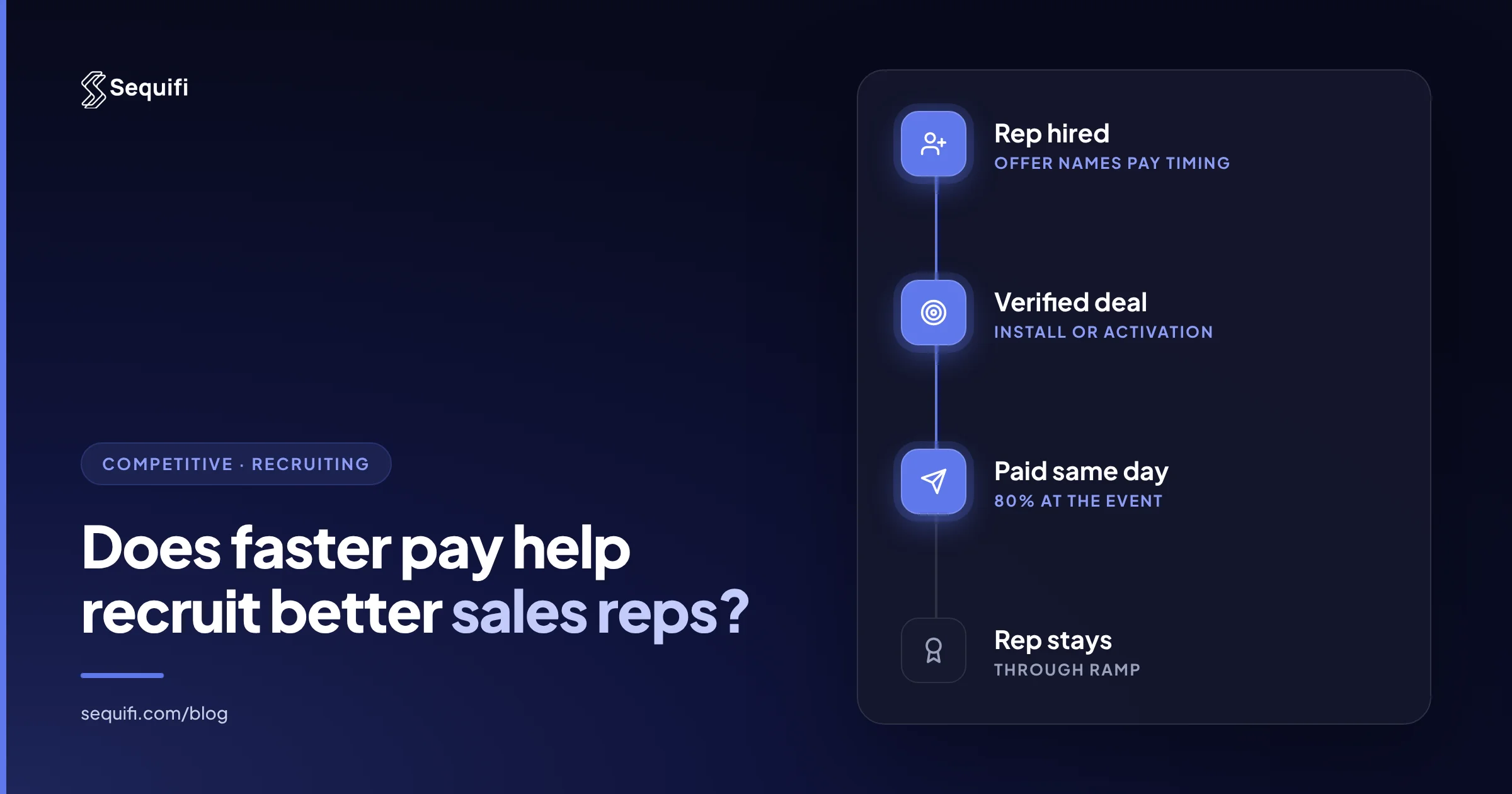
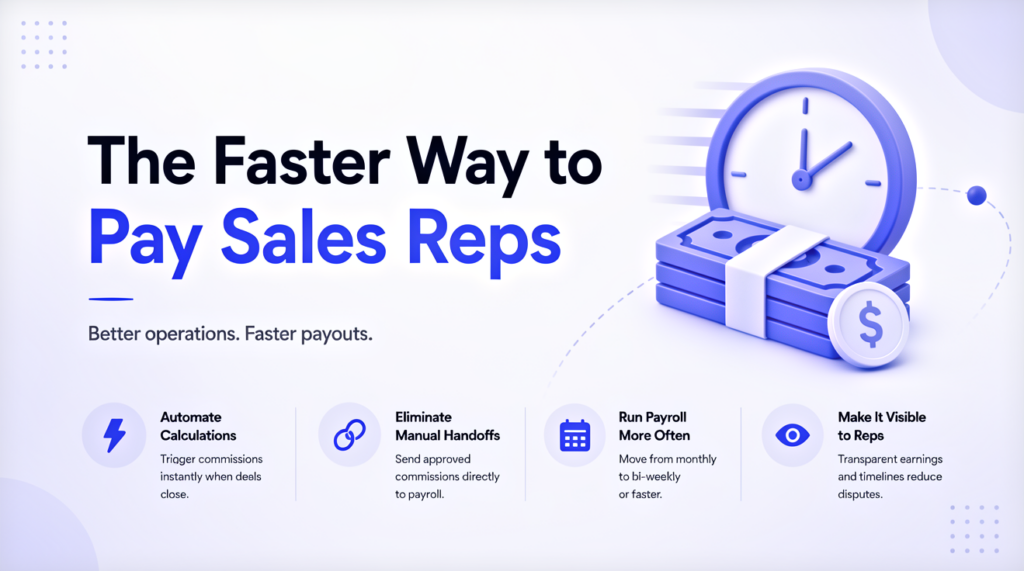
It is a recruiting and retention signal. Experienced reps have been underpaid before, or believe they have. A company that shows candidates the actual rep view, with real deal lines and pay dates, is making a claim it can back up. It pairs naturally with pay speed; see whether faster pay helps recruit better sales reps. Fast pay that reps cannot verify does not build trust. Verified pay that arrives fast does.
The law is moving the same direction. Under the National Labor Relations Act, most non-supervisory employees have a protected right to discuss their wages with coworkers, so pay secrecy policies are generally unlawful for those employees. Several states, including California, Colorado, New York, and Washington, now require pay ranges in job postings. California also requires commission agreements to be in writing and to explain how commissions are computed and paid (California Labor Code section 2751). Treat these as a floor, check each state where you have reps, and have counsel review your plan. This is general information, not legal advice.
What breaks at scale
At 50 reps, transparency runs on goodwill. The owner or sales manager knows every deal and can answer most questions from memory. The plan lives in a document, and payroll is one person with a spreadsheet.
At 200 reps, memory fails. Plans multiply by region, role, and start date. Overrides depend on whole-team numbers. Reps compare checks in group chats, find differences they cannot explain, and assume the worst. Managers spend payday week answering pay questions instead of coaching. The spreadsheet that drives payroll is not something you can share with reps, so they see only the total.
At 500 reps, across several states and a W-2 and 1099 mix, the gap becomes structural. The CRM shows one status, the commission tool shows another, and payroll pays a third number after adjustments. No one can give a rep a single, true view of their pay because no single system holds it. Disputes turn into escalations, and your best reps start taking recruiter calls. Older approaches to real-time pay transparency for sales reps fail at this stage for the same reason: the data does not agree.
How Sequifi solves this
Sequifi is built for any high-velocity sales org with multi-trigger comp plans, including solar, fiber, pest control, mortgage, insurance, and home services. Three capabilities do the work:
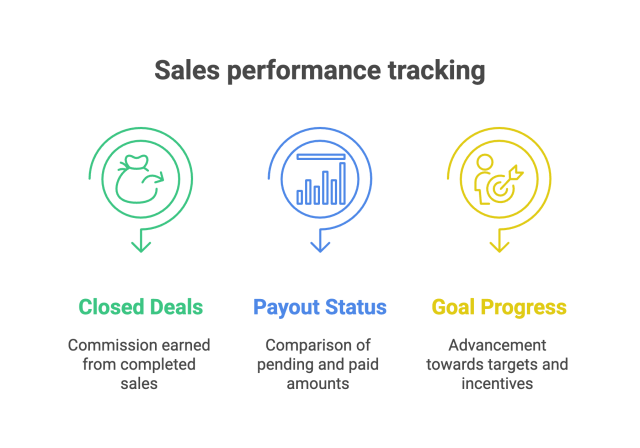
- Rep-facing pay transparency and performance dashboards. Each rep sees earned, pending, and held pay deal by deal, with the trigger and rate behind every line.
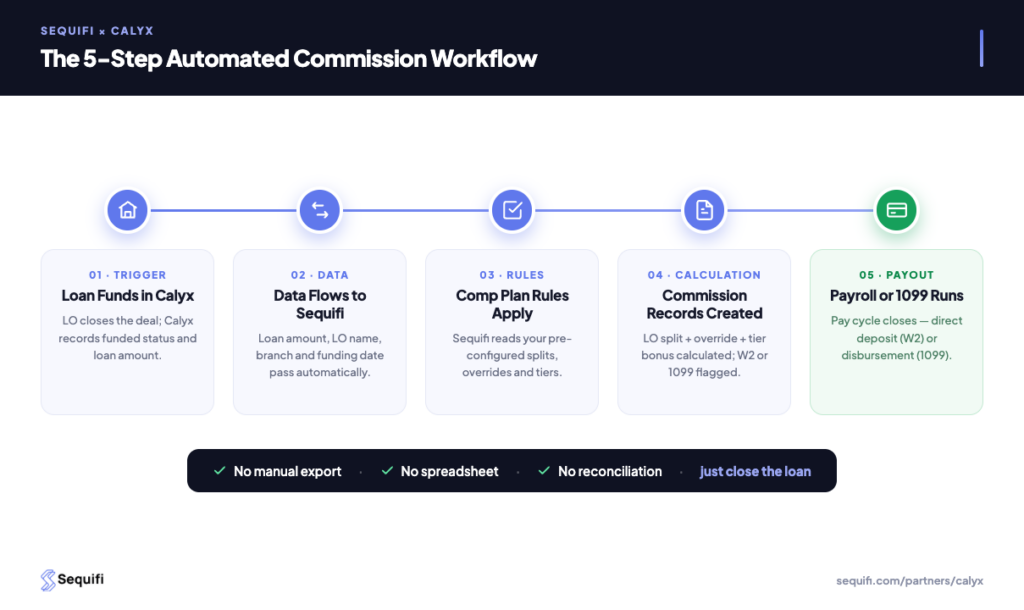
- One commission engine with W-2 and 1099 payroll. The number a rep sees is the number that gets paid, because the calculation and the payroll run happen in the same system.
- Multi-trigger commission structures. Closes, installs, activations, overrides, holdbacks, and clawbacks are tracked as separate events, so every adjustment has a visible reason.
Frequently asked questions
What should a sales rep be able to see about their pay?
At minimum: the written comp plan, every deal they are paid on, the status and trigger for each deal, the rate applied, any holdback or clawback, and the date each amount was or will be paid. They should also see overrides or splits that affect them. If a rep cannot trace their check back to individual deals, the setup is not transparent yet.
Does pay transparency mean sharing everyone's commissions?
No. For most sales teams, transparency means each rep fully understands their own pay and the rules behind it. Managers see their teams. Leaderboards can rank production, such as deals or installs, without publishing earnings. Employees can still choose to discuss their own pay, and most non-supervisory employees have a legal right to do so.
How does pay transparency reduce commission disputes?
It removes the two biggest sources: missing information and conflicting records. When reps can see deal status, most questions answer themselves. When reps and payroll look at the same record, real disagreements get resolved faster because the facts are already agreed. What remains are true plan questions, which you can fix in the plan.
Is pay transparency required by law?
Partly, and it varies by state. Many states now require pay ranges in job postings, federal law protects most employees' right to discuss pay, and some states require written commission agreements that explain how commissions are calculated. Requirements differ by location and worker type, so review each state where you have reps with employment counsel.
When should a growing team invest in transparency?
Before you pass about 100 reps, or as soon as you add a second plan type or a second pay trigger. That is when reps can no longer check their own pay in their heads, and when manager time spent on pay questions starts to grow faster than headcount.
Conclusion
Pay transparency matters because commission pay is hard to verify, and reps who cannot verify their pay stop trusting it. The fix is not a longer comp plan document. It is a deal-level view that shows each rep what they earned, what is pending, what was held back, and why, using the same data payroll pays from. As a next step, pull last month's pay questions and sort them into status questions and real disputes. The first group shows how much visibility would save. To see how one system gives reps that view, see how Sequifi shows reps their pay deal by deal.
See Sequifi run your kind of pay.
Commissions, payroll and HR in one platform, built for teams where every paycheck is different.
Book a demo